 Nanaimo Custom Bathrooms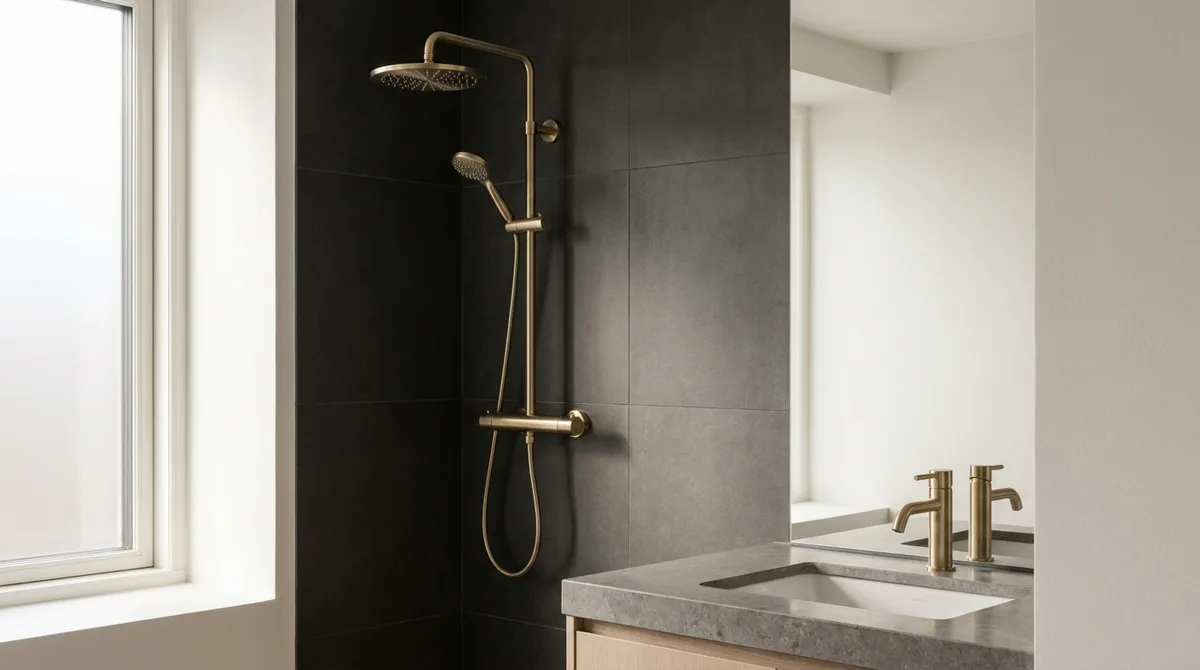
A handheld showerhead is a multipurpose tool that a fixed wall outlet cannot provide. The hose gives reach and flexibility — you can rinse the floor of the shower enclosure without water running everywhere, you can help a child wash, you can rinse a dog or towel, you can wash hair from above or below, and you can clean the walls and floor. Where the handset parks and stores when not in use is a practical physical detail that decides whether it actually gets used regularly or whether it ends up abandoned on the edge of the shelf, chronically dripping.
The reach the hose actually provides in practical use depends on its length and where it originates from. A handheld on a slide bar can reach anywhere along the full length of the bar. A handheld on a fixed bracket reaches as far as the hose allows from that bracket point. A wall elbow gives a fixed starting point at the wall. The hose itself has a practical minimum length below which you cannot grip the handset firmly and simultaneously reach the far corner of the shower enclosure.
Where the handset parks when not in use and whether that park location has drainage are separate decisions with different tradeoffs. A park that points downward sheds water back into the shower enclosure. A park that is horizontal or angled upward holds water in the handset interior and hose, which sits there dripping and re-dripping until the next shower use. Some park brackets have a drain built into them. Some do not. The functional choice is between accepting wet dripping and the added complexity and cost of providing integrated drainage to the park location.