 Nanaimo Custom Bathrooms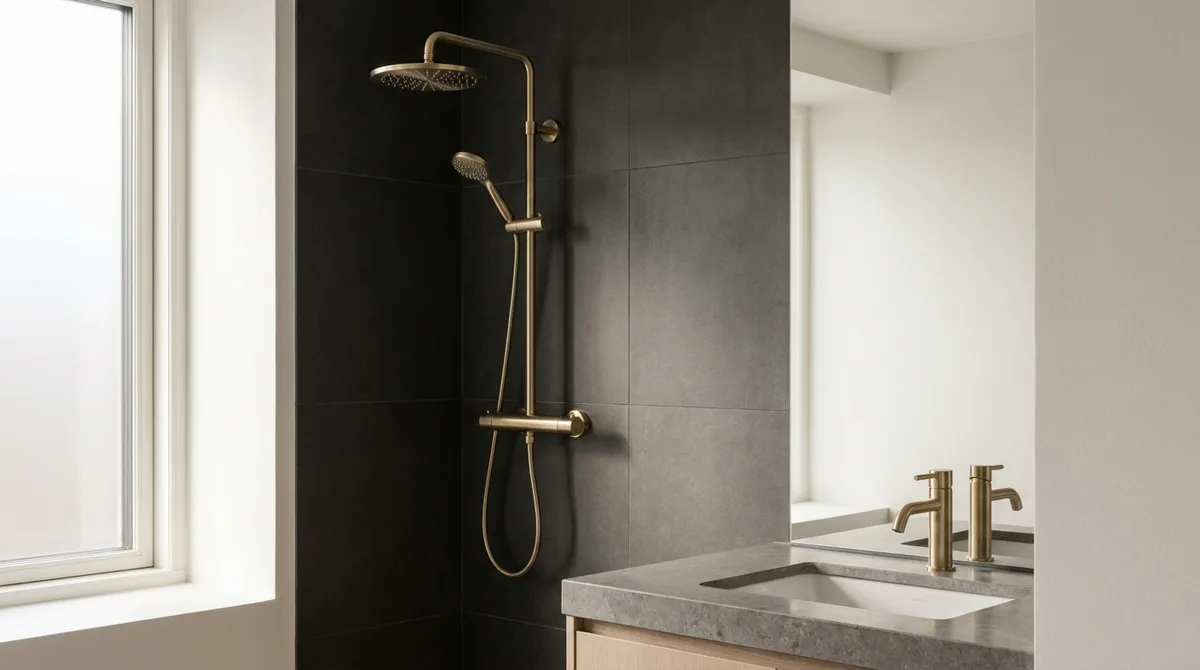
A fixed showerhead installation involves two critical decisions: where the water comes from and how high the outlet is positioned on the wall or ceiling. A wall arm brings water from the wall at a height that is convenient for routing the pipe through the wall structure. A ceiling drop brings water down from above through the ceiling cavity. Each routing method changes what the spray pattern looks like, where a person can stand to use it, and what has to be sealed and waterproofed where the pipe penetrates the finished wall or ceiling surface.
Head height is set for the tallest person who will use the shower regularly, not for an average person or a default dimension. A head that is too low forces taller users to crouch uncomfortably. A head that is too high makes rinsing hair from below the head awkward and sometimes physically impossible. The height is measured from the floor to the centerline of the spray outlet opening. Once that height is set and the wall is tiled or the ceiling is finished, that height is permanent. Changing it later requires opening the wall or ceiling, which is expensive and destructive.
The spray itself comes in very different characters and coverage patterns. A rain head has a wide face with many small holes, creating soft, wide coverage and gentle droplets. A standard head is more focused with larger droplets and tighter coverage. The spray pressure, flow rate, and coverage area are all matched to the valve's specifications and to the shower enclosure size. A heavy rain head needs adequate space and good drainage to function without pooling. A modest or focused head works in tighter enclosures with less drainage. The choice of spray character affects what the shower experience is like to use every single day.