 Nanaimo Custom Bathrooms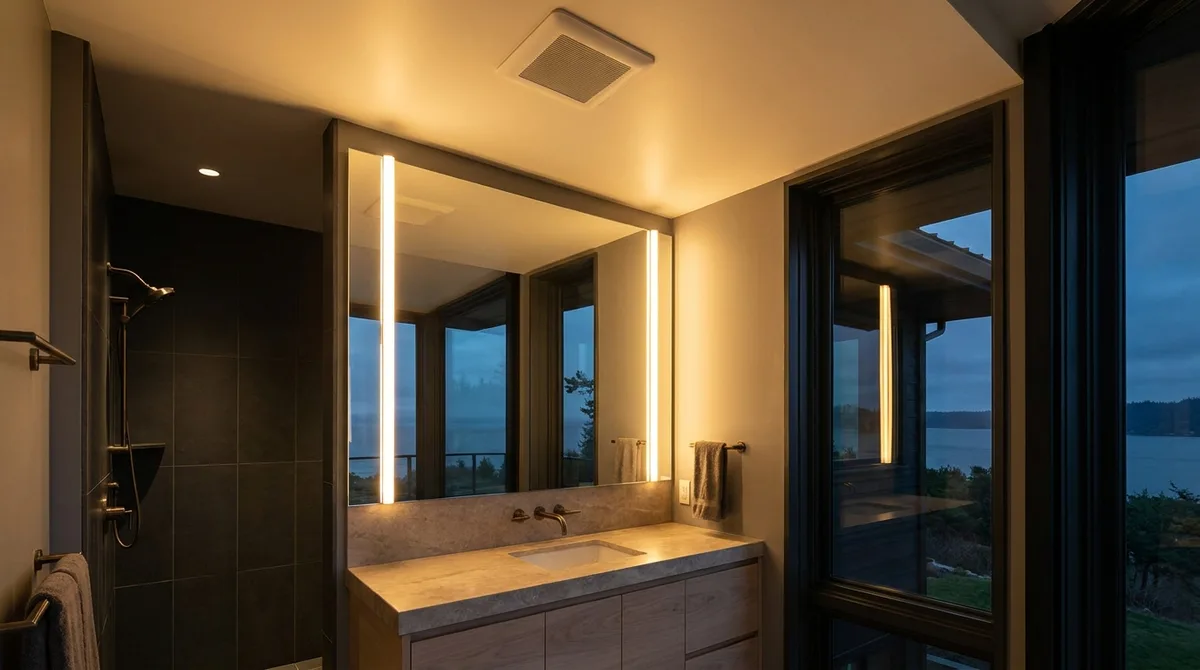
A single ceiling fixture is the lighting failure mode of any bathroom. It casts shadows across the face, leaves the mirror dark, and forces the whole room to be bright or dim as one unit. There is no middle ground — either the entire room is flooded with light or everything is dark. The answer is layering: ambient light that fills the room evenly, task light concentrated at the mirror for grooming and makeup, and accent light for mood and visual interest. Each layer is on its own control so the room can be bright in the morning for efficiency and low in the evening for relaxation.
Colour temperature and colour rendering are critical. A cool white light (5000K or higher) makes the morning easier and looks clean and energizing. A warm white light (2700K) is gentler and more forgiving, suitable for evening. Every light source in one room should use the same colour temperature throughout. If some lights are warm and others are cool, the room looks disjointed, unsettling, and the reflected light in the mirror becomes confusing. Colour rendering — how accurately colours appear under that light — affects how makeup looks and how skin tones read. Cheap LED bulbs can make skin look sallow or off-colour. Better quality LEDs render colour more faithfully and make a meaningful difference in a bathroom where people are looking at themselves in the mirror.
Separate switching and dimming give flexibility for different times and moods. Dimming the ambient light while the mirror lights stay bright is fundamentally different from dimming everything at once. A bathroom at night is not a bathroom in the morning. The ability to set different brightness levels for different times of day is the difference between lighting that works for the full day and lighting that works for only part of it. Good lighting design recognizes that bathroom needs change hour by hour.