 Nanaimo Custom Bathrooms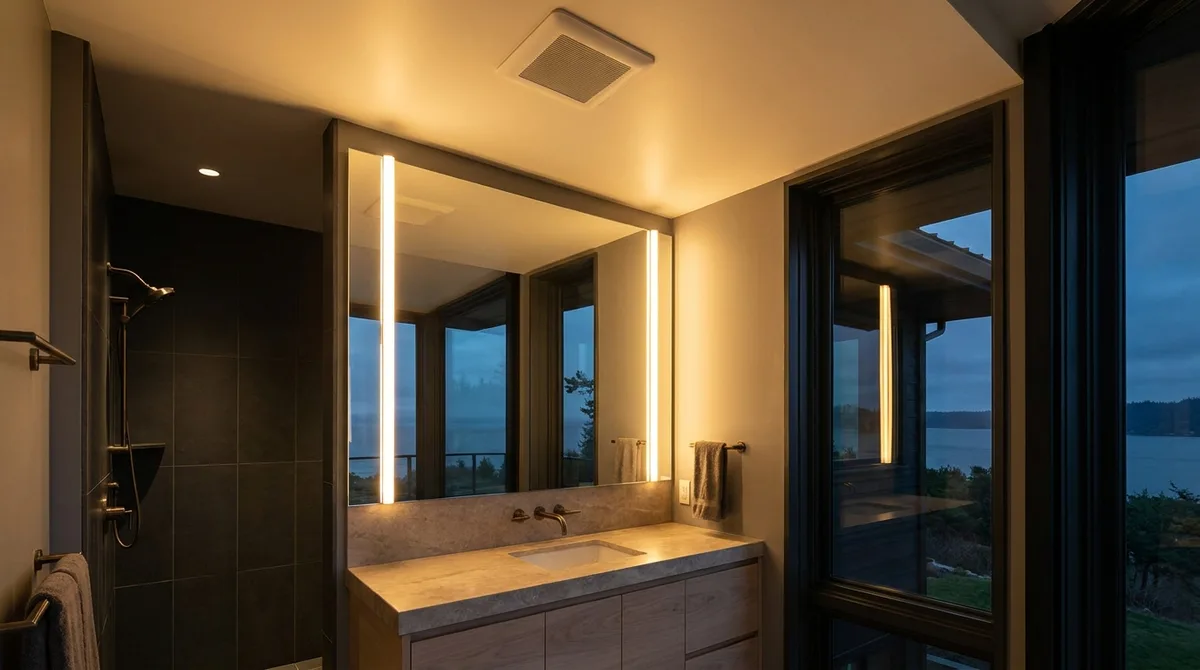
A heated towel rail is a practical detail that actually changes how the bathroom feels and functions. A towel that has been drying on a cool rail all night is still damp at morning shower time, requiring a fresh towel to be fetched. A towel drying on a heated rail is completely dry and warm to the touch. The size and placement of the rail matters significantly — it has to be within comfortable reach of the shower and sized to carry the actual number of towels a household uses daily. A decorative rail that fits only one towel is not enough for function; a rail that is oversized for the space wastes heat energy and is visually disproportionate.
There are two primary formats: a ladder rail and a bar rail. A ladder rail has multiple horizontal rungs spaced throughout its length and holds more towels efficiently. A bar rail is simpler and takes less wall space, with typically one or two horizontal bars. The choice depends on how many towels are needed for the household's daily rotation and how much wall space is available. The rail has to be placed where towels can reach it from the shower without crossing paths with other fixtures, cabinetry, or creating obstacles. Placement against a wet shower enclosure or in a corner is often the best option.
A demisting heating element behind a mirror changes the first minute after a shower significantly. Without demisting, the mirror fogs immediately from steam and stays fogged for several minutes while the glass gradually clears as the room cools. With demisting, the mirror stays clear and reflective throughout and after the shower, which is convenient for grooming if the bathroom is being used by multiple people back-to-back. Demisting adds cost, electrical load, and requires its own circuit or control. It is often considered a luxury feature rather than a necessity.
Heated features must run on their own independent controls and circuits. A towel rail might be on a timer so it runs at certain times of day (morning and evening, perhaps) rather than continuously wasting energy. A demisting mirror might be on a switch so it runs only when needed. Each heat source on its own dedicated electrical circuit or control prevents one from overloading the system and allows scheduling that makes sense for the space and lifestyle. This separation of controls also improves efficiency by avoiding simultaneous operation of multiple heat sources.