 Nanaimo Custom Bathrooms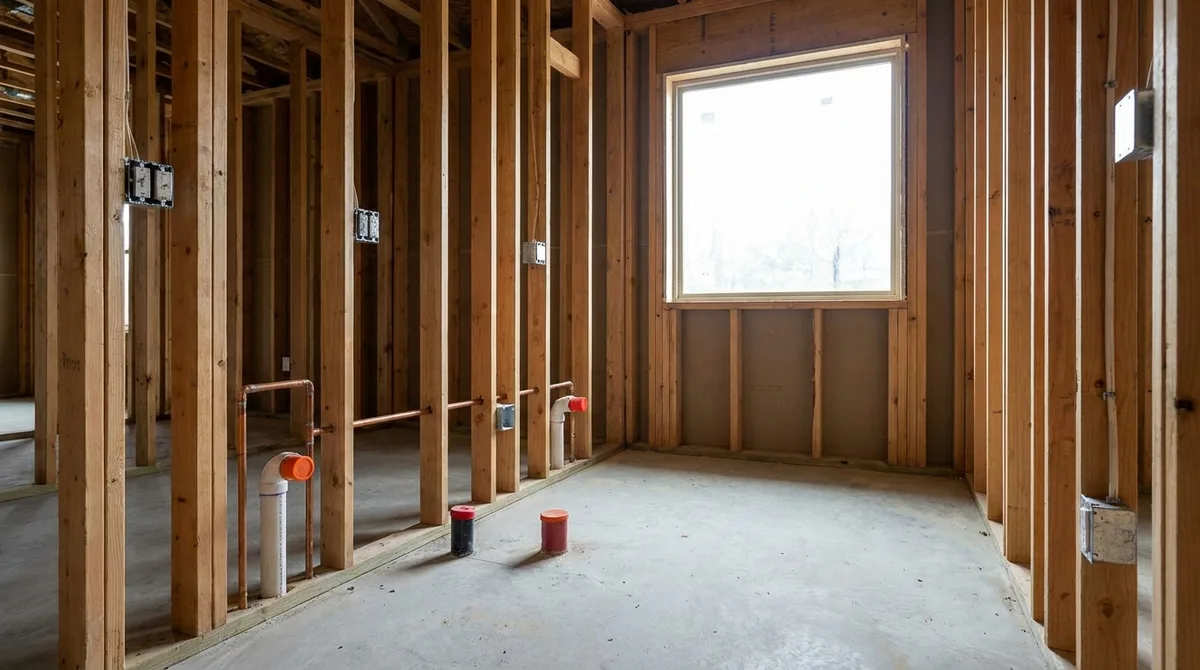
Strip-out day is not about the bathroom. It is about the house around it. The route material travels from the bathroom to outside determines where dust goes. Dust follows the route. If the route is through living spaces, dust ends up there. If the route is isolated, dust stays contained.
Dust and noise are a lived reality for an occupied house. Containment does some work but is not perfect. Sealing doorways reduces dust in adjoining rooms but does not eliminate it. Noise from demo travels through the house regardless of containment. Setting expectations before work starts means fewer surprises during it.
The order things come out in is not simply installation in reverse. Fixtures come out first — the toilet, the sink, the shower enclosure. Then the surfaces — tile, walls, finishes. Then the structural elements — studs, framing. The order is determined by what has to be accessible to remove what comes next, not by logical sequence.
What is worth keeping, what is worth removing carefully, and what is going regardless are decisions made during planning. Some fixtures might be reusable. Some materials might be salvageable. Some things go straight to disposal. These decisions determine how the work happens and how long it takes.
How long the room is out of use from this stage is an expectation to set before it starts. Strip-out can take days or weeks depending on the scope. Setting expectations means the household knows when the bathroom is offline. This ensures quality outcomes. This ensures quality outcomes. This ensures quality outcomes. This ensures quality outcomes. Thi