 Nanaimo Custom Bathrooms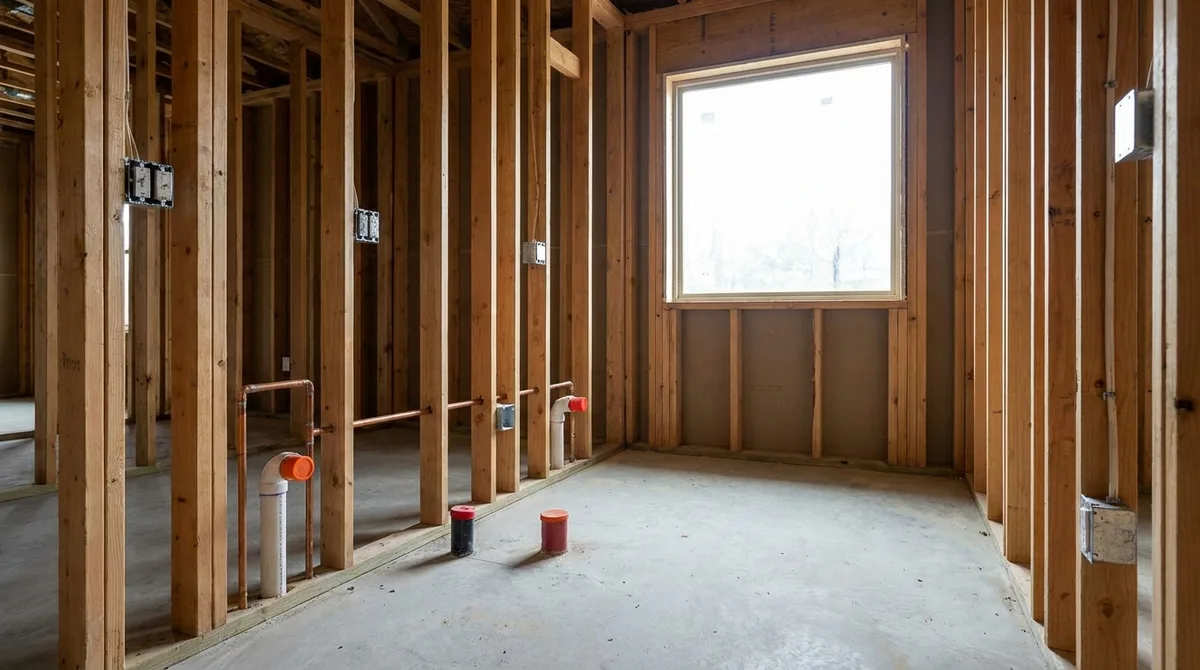
Two trades share one open wall. Plumbing runs pipes and drains. Electrical runs wires and conduit. They work in the same cavity, in the same wall opening. The handover between them is a coordination problem. Both trades are working to fixture specifications — where the toilet is, where the sink is, where outlets are. Those specifications have to be final before either trade can finish.
The single point at which fixture decisions have to be final is before the first trade starts their rough-in. Plumbing has to know where the toilet waste is, where the sink drain is, where hot and cold water go. Electrical has to know where outlets are, where the mirror will be, where the fan is. All of these are derived from fixture positions. If fixture positions change after rough-in starts, the work has to be redone.
Who needs to be on site when determines the schedule. Plumbing typically goes first, running its waste and supply lines before electrical runs its conduit. Electrical follows, fitting into the space plumbing has left available. The timing is coordinated so the first trade is out before the second has to work in the same space.
What a homeowner can usefully ask about scheduling is: when is each trade on site? How long does each one need? If plumbing is delayed, when does electrical shift? These questions reveal how the trades depend on each other.
What a delay in one trade does to the other is multiply delays. If plumbing is slow, electrical waits. If electrical is slow, board cannot go up. Delays propagate downstream, each one pushing the next. This is why coordination is critical.