Skip to content
Nanaimo Custom Bathrooms

Bathroom Construction & Code Compliance

Framing

The walls close when the list of everything that will ever hang on them is complete. That list is the whole job at this stage.

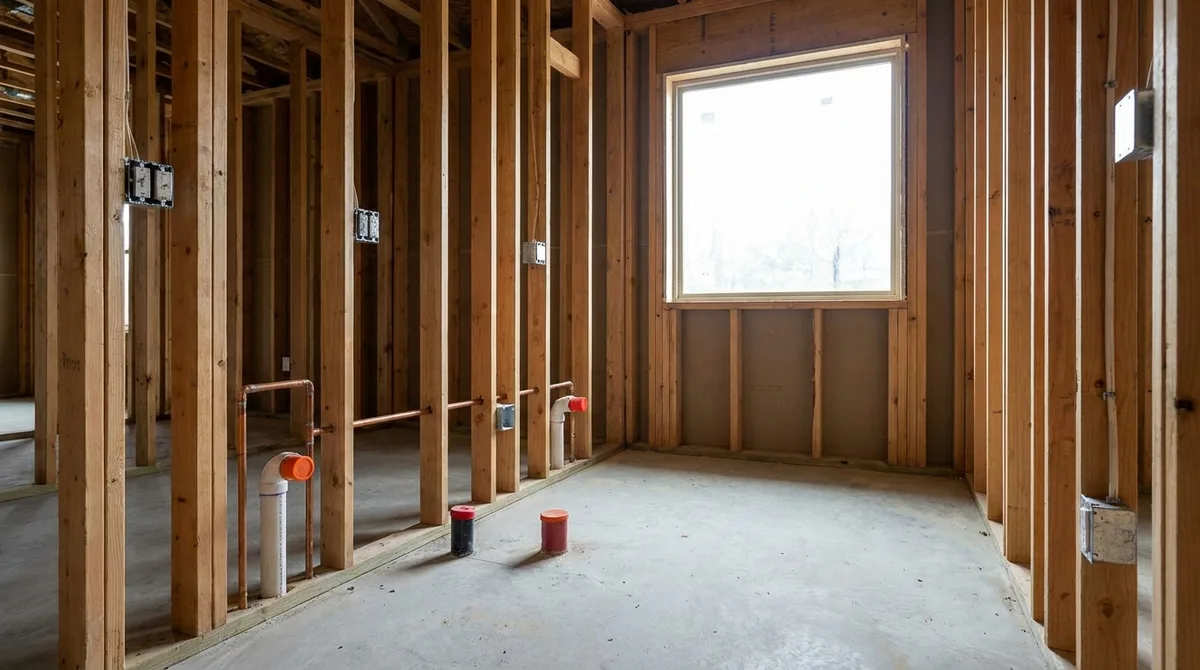
A bathroom stripped to studs and subfloor with new framing and blocking in place

What this involves

Framing

Framing closes when the list of everything that will ever be fixed to the walls is complete. That list is the entire job at this stage. The blocking schedule captures every mirror, every shelf, every grab bar, every fixture attachment point. If something is missed, the wall closes without blocking for it, and adding it later requires opening the wall.

The blocking schedule is one decision point that covers everything. Not separate decisions for mirrors, then for hardware, then for grab bars. One comprehensive list that covers it all. Missing one item means one extra project later — reopening a wall, installing blocking, refinishing.

Why the list has to be complete before walls close is simple: once drywall covers the cavity, adding blocking is not a surface-level retrofit. It requires opening the wall, cutting back drywall, installing the blocking, and refinishing. This is expensive and disruptive.

Altered and new partitions are part of the framing conversation. If the bathroom layout is being changed, walls move or new walls are added. These changes affect the blocking schedule — new positions for everything that attaches to walls.

Packing out to make room for services is another framing consideration. Plumbing and electrical need space in the walls. If the wall is too thin for the services the bathroom needs, the wall has to be built thicker or the structure has to be altered. This is a framing decision.

The questions worth asking at the framing stage are the ones that are much more expensive to ask later. Where will grab bars go? Where will the mirror be? What will be hung on which walls? These questions drive the blocking schedule. Asking them after framing closes means opening walls to answer them.

  • Licensed & insured
  • WorkSafeBC coverage
  • Written quotes & contracts
  • Built to BC Building Code

Why it matters

What you get

The blocking schedule is one decision covering everything, not many separate decisions

Make one comprehensive list of everything that will ever attach to walls: mirrors, grab bars, hardware, shelving, fixtures, everything. Include positions. The blocking schedule is this list, installed while framing is open. Nothing is missed.

Missed items become extra projects — reopening walls to add blocking

If a grab bar position is not on the schedule, the wall closes without blocking. Adding it later requires opening the wall, installing blocking, and refinishing. This is expensive. Completeness upfront is cheap.

Altered partitions and new walls change where everything goes — this is a framing-stage decision

If the layout is changing, walls move. New positions for fixtures, mirrors, hardware all follow. These changes are made during framing planning, not discovered after walls close.

Questions worth asking at framing are much cheaper than asking them after

Where does the mirror go? Where are grab bars? What gets hung where? These questions are free to ask during framing. Asking after means opening walls.

How it runs

The process

  1. 01

    Create the blocking schedule: every item that will ever be fixed to a wall, with positions

    Mirrors, hardware, grab bars, shelving, fixtures — everything. Include heights and positions. This is the complete list that becomes the blocking schedule.

  2. 02

    Work through the list with the people who will use the room

    Ask them: where will the mirror go? Where are grab bars needed? What will be hung where? Finalize the list before framing starts.

  3. 03

    Account for altered walls and new partitions in the blocking schedule

    If layout is changing, the blocking schedule changes too. New positions are accommodated during framing.

  4. 04

    Build the blocking during framing, while the cavity is open

    Every position on the list gets blocking installed. Nothing is deferred or skipped.

Questions

Frequently asked

Blocking is a piece of lumber installed in the wall cavity to provide a solid anchor point for fasteners. Mirrors are hung from blocking. Grab bars are fastened into blocking. Fixtures attach to blocking. It is decided early because it has to be installed while the wall is open, before drywall goes up.

The wall closes without blocking for it. Adding it later requires opening the wall, cutting back drywall, installing the blocking, and refinishing. This is expensive. It is worth getting the list complete before framing closes to avoid this.

Completely complete. Every item that will ever be fixed to a wall — today or in the future. Mirrors, hardware, grab bars, shelving, fixtures, future grab bars, everything. The list is the blocking schedule.

Where will everything go? Where are grab bars? Where is the mirror? What gets hung where? Can the wall accommodate the services that need to go through it? These questions are cheap to ask during framing. Asking after means opening walls.

Walls still open?

This is the moment the list of what gets hung has to be finished.