Skip to content
Nanaimo Custom Bathrooms

Bathroom Construction & Code Compliance

Subfloor Preparation

Nothing waterproof or tiled starts until this stage closes, which is why it moves more finish dates than any other.

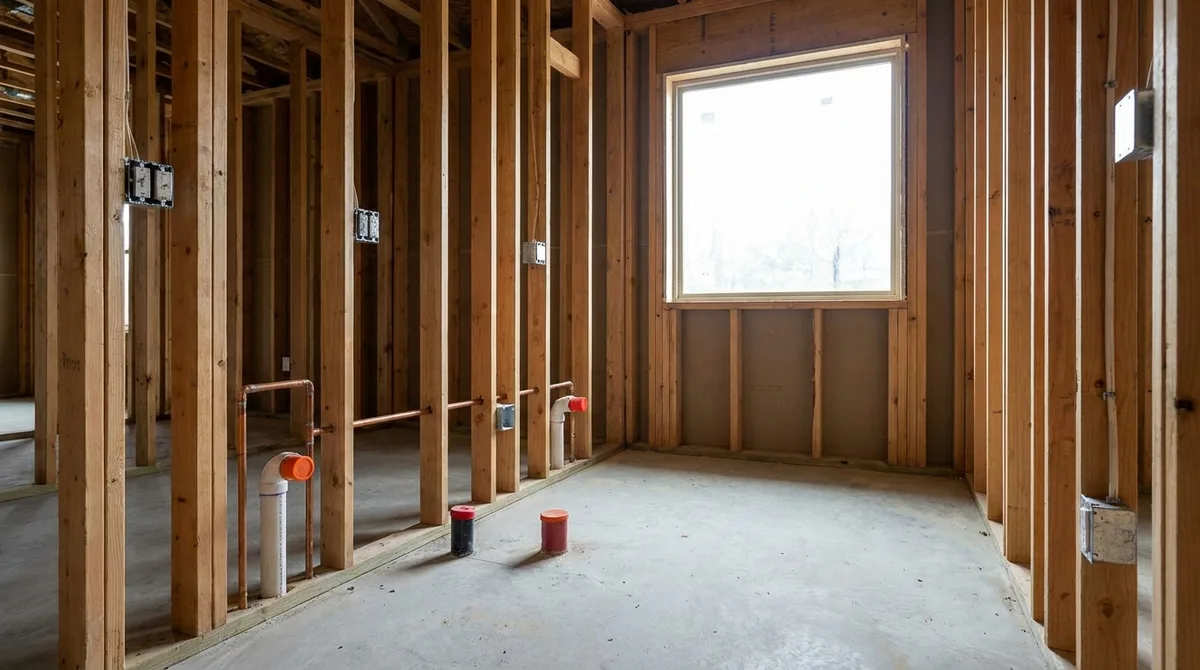
A bathroom stripped to studs and subfloor with new framing and blocking in place

What this involves

Subfloor Preparation

Subfloor work sits after strip-out and before waterproofing and tiling. Nothing downstream can start until the subfloor is prepared and cured. This position in the sequence makes it the stage that moves finish dates most often. When the floor is not as expected — when there is damage that needs repair, when the level is wrong — everything downstream shifts.

The schedule consequence when the floor is not as expected is described as a scope conversation, not as a discovery story. The floor is assessed during demo or early framing. If repair is needed, the scope changes, the cost changes, and the timeline changes. The conversation happens before further work, not after.

What to expect on site during this stage includes curing time and waiting as real time. Floor prep is not instantaneous. If new material is installed, it cures. If the subfloor is being levelled, that work takes time. Curing and waiting are not delays — they are part of the work sequence and have to be accounted for in the schedule.

This is the stage that most often moves the finish date because two things happen: (1) the floor condition is discovered and has to be discussed and scoped, and (2) the work takes longer than expected because of curing and waiting. Both are real. Both move the date. This ensures quality outcomes. This ensures quality outcomes. This ensures quality outcomes. This ensures quality outcomes. This ensures quality outcomes. This ensures quality outcomes. This ensures quality outcomes. This ensures quality outcomes. This ensures quality outcomes. This ensures quality outcomes. This ensu

  • Licensed & insured
  • WorkSafeBC coverage
  • Written quotes & contracts
  • Built to BC Building Code

Why it matters

What you get

Nothing downstream can start until this stage closes

Waterproofing, tiling, finishes — all wait for subfloor prep to be complete and cured. If the floor is not ready, nothing starts. This dependency makes the stage a scheduling bottleneck.

Floor condition discovered here becomes a scope conversation, not a surprise

The floor is assessed early. If damage is found, the scope is discussed and agreed. If levelling is needed, the cost is determined. The conversation happens upfront, not mid-project.

Curing and waiting are real time, not wasted time

New floor material cures. Levelling compounds set. This takes time. Accounting for it in the schedule is accounting for reality, not adding padding.

This stage moves finish dates more than any other because of condition uncertainty and curing time

The floor's condition is unknown until demo happens. Curing time is not negotiable. Both are sources of schedule movement. They are managed by planning for them upfront.

How it runs

The process

  1. 01

    Assess floor condition during demo or early in the project

    Walk the floor, identify damage, determine what has to be done. Damage repair, levelling, substrate prep — these are all scoped in this stage.

  2. 02

    Have the scope conversation if condition is not as expected

    Floor damage, low spots, high spots — if work beyond basic prep is needed, the scope is discussed and agreed. The cost and timeline are adjusted.

  3. 03

    Do the subfloor work: repair, levelling, preparation

    The work is done to the plan. New material is installed if needed. Levelling is performed. Curing time is accounted for.

  4. 04

    Wait for curing or setting before the next trade starts

    Curing time is real time. It is part of the schedule. Waterproofing does not start until the floor is cured and ready.

Questions

Frequently asked

After demolition and framing, before waterproofing and tiling. The floor condition is assessed, repair or levelling is done, and the floor is prepared as a substrate for waterproofing. Everything downstream waits for this to be complete.

The scope changes. If damage requires repair, that work is added. If levelling is needed, that time is added. The cost changes and the timeline moves. The conversation about the change happens upfront, not mid-project.

Real time. If new material is installed, it cures — that is hours or days. If levelling compound is used, it sets — that is time. This is not delay; it is part of the process. It has to be accounted for in the schedule.

Two reasons: (1) the floor condition is unknown until demo, and (2) curing time is not negotiable. If damage is found, the timeline moves. If curing takes longer than expected, the timeline moves. Both are real factors.

Waiting on the floor?

This is the stage that quietly sets the finish date.