Skip to content
Nanaimo Custom Bathrooms

Bathroom Insulation & Moisture Protection

Moisture Protection

Outside the shower there is no membrane doing the work — there are junctions, and which ones get sealed is a decision.

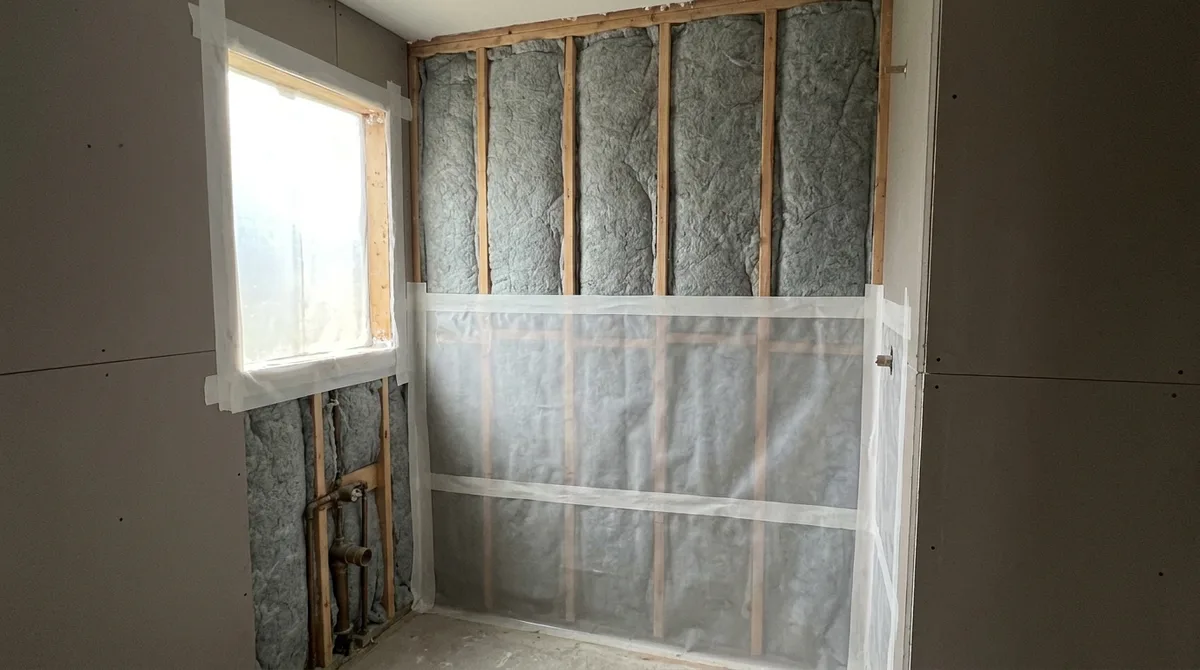
An open bathroom stud wall with batt insulation and a taped polyethylene vapour barrier, with copper supply pipes stubbed out beside a window

What this involves

Moisture Protection

Outside the shower, there is no waterproof membrane. There is no layer. The protection is junctions — the lines where one material meets another. A basin is a hole in the vanity. Water splashes at the basin, runs down the wall behind it, and the protection is the caulk in the joint where the wall meets the vanity top. A bathtub is a container sitting on the floor. Water runs down the side of the tub, and the protection is the caulk in the joint where the tub edge meets the floor. A toilet is mounted on the floor. Water sometimes escapes from around the base, and the protection is the caulk in the joint around the toilet.

These junctions are protected by silicone caulk, which is waterproof and flexible. The caulk seals the joint, stopping water from running down into the wall below. This is different from a waterproof membrane, which is a continuous layer that stops water outright. Caulk at junctions is how moisture is controlled outside the wet zone — the zone where tile and waterproofing are doing the heavy work.

But not all junctions are sealed. Some are deliberately left open so water can drain and dry. A junction that is sealed but collects water underneath can trap moisture and promote mould growth on the back. A junction that is left open allows water to drain and air to circulate, drying the area. The choice of which junctions to seal and which to leave open is a design decision based on how water actually moves in that part of the bathroom.

The floor perimeter is the line where the floor meets the wall. Water stands at this line if there is any low spot in the floor. The seal here is complicated because water sitting against the wall will find its way inside if the seal fails. The detail at the floor perimeter is usually a coved base — a small radius where the floor curves up to meet the wall — so water does not collect in a sharp corner. The junction is sealed but with an understanding that this is the lowest point where water collects.

A sealed joint is not permanent. Caulk has a life. After five to ten years, depending on the caulk type and the exposure, the caulk loses flexibility, cracks, or separates from the edge. When that happens, water begins to get past. This is maintenance work. The caulk has to be removed, the joint cleaned, and new caulk applied. A bathroom owner who understands this schedule — and plans to re-caulk every five to seven years — can keep junctions sealed and dry.

The weight of water is against the bottom of the room. Water runs down from above — from the basin, the tub, the ceiling — and collects at the floor level. This is where protection is most critical. The junctions at the floor level, especially at the perimeter, are where water concentration is highest and where failure is most consequential. These are the junctions that need the most attention and the most durable sealing.

  • Licensed & insured
  • WorkSafeBC coverage
  • Written quotes & contracts
  • Built to BC Building Code

Why it matters

What you get

The room outside the shower is protected by junctions, not by membrane

There is no waterproof layer outside the shower. Water is protected by silicone caulk at the junctions where materials meet — basin to vanity, tub to floor, toilet to floor, wall to floor. These junctions are sealed with flexible caulk that stops water from running into the wall below. This is how moisture control works outside the wet zone. The junctions are the protection.

Some junctions are sealed and some are deliberately left open so water can drain

A sealed junction can trap water if water collects behind it. An open junction allows water to drain and air to circulate, drying the area. The choice depends on the location and how water actually behaves there. High-splash areas around the basin are sealed. Some junctions at the floor might be left partially open so water can escape. The strategy is to shed water where possible and seal where necessary.

Silicone caulk is chosen for flexibility and longevity, not for looks

Silicone caulk is flexible, waterproof, and has a long life — ten years or more depending on exposure. Urethane caulk is more rigid but can work in some applications. Paintable caulk is not waterproof enough for a bathroom. The choice of caulk is about performance and longevity, not about colour or appearance. The caulk will discolour or stain over time, and that is accepted because the function matters more than the look.

A sealed joint has a known life and requires maintenance on schedule

Silicone caulk lasts five to ten years depending on exposure and use. After that, it loses flexibility, cracks, or separates. When that happens, water begins to get past and inside the wall. Re-caulking at five to seven year intervals keeps the protection in place. A bathroom owner who budgets for this maintenance can keep junctions protected. A bathroom owner who ignores it will eventually have water damage.

How it runs

The process

  1. 01

    Identify which junctions are high-risk for water collection and which can safely drain

    High-risk junctions are where water concentrates or where water can run down into the structure. The basin location, the tub edge, the toilet base, and especially the floor perimeter are high-risk. Junctions that are less likely to collect water — some wall-to-wall corners, some high-wall junctions — can remain open. The choice is made based on water flow and where protection is most needed.

  2. 02

    Seal high-risk junctions with silicone caulk rated for kitchens and bathrooms

    Silicone caulk is applied to all high-risk junctions. The caulk is silicone, not paintable caulk or urethane, because silicone is waterproof and flexible. The caulk is tooled into the joint, creating a clean, slightly concave bead that sheds water. The application is thorough and complete. No gaps are left.

  3. 03

    Leave low-risk junctions open or use smaller caulk beads so water can drain

    Some junctions can be left open, allowing water to drain and air to circulate. Other junctions might have a smaller caulk bead so water can escape around the sides. The detail is designed so water does not accumulate on the back of a sealed joint where mould can grow.

  4. 04

    Plan re-caulking intervals — every five to seven years is typical

    The caulk has a known life. As it ages, it loses flexibility, cracks, or separates. The owner is informed that re-caulking is scheduled maintenance, not a repair. By re-caulking on a five to seven year schedule, the protection is maintained and water damage is prevented. This is a maintenance plan, not a one-time installation.

Questions

Frequently asked

Silicone caulk at the junctions where water can run into the wall or floor. The basin area is protected by caulk between the wall and the vanity top. The tub edge is protected by caulk between the tub and the floor. The toilet base is protected by caulk around the toilet footprint. The floor perimeter is protected by caulk between the floor and the wall. These junctions are where water control happens outside the wet zone.

A sealed joint traps water if water collects behind it. An open joint allows water to drain and air to circulate, drying the area. High-splash areas like the basin are sealed to stop water from running down into the wall. Some floor junctions might be left open or have smaller caulk so water can escape. The strategy is to seal where water collects and leave open where water can drain.

Silicone caulk lasts five to ten years depending on exposure and use. After that, it loses flexibility, cracks, or separates. When failure starts, water begins to get past the seal. The caulk should be re-applied every five to seven years as preventative maintenance. Waiting until failure occurs allows water damage to happen. Treating it as scheduled maintenance keeps junctions protected.

Related

More in bathroom insulation & moisture protection

Worried about water outside the shower?

Most of it comes down to which joints were left able to dry.