Skip to content
Nanaimo Custom Bathrooms

Bathroom Insulation & Moisture Protection

Vapour Barrier Installation

It works as a continuous plane or it does not work — and a bathroom is the room most determined to cut through it.

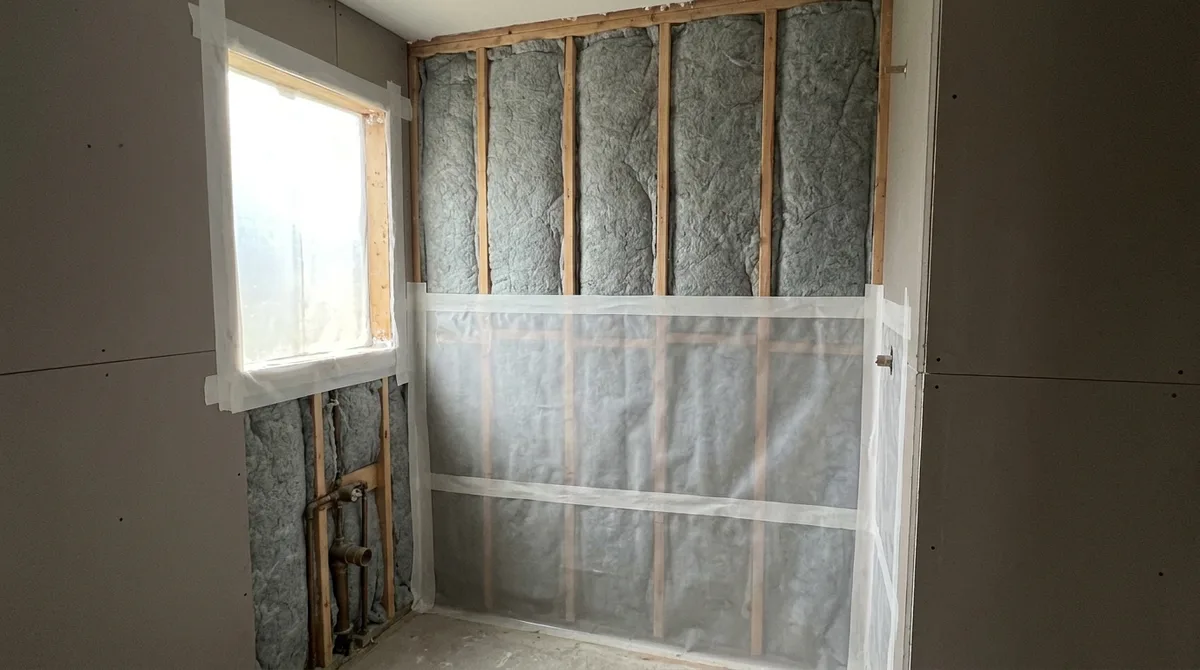
An open bathroom stud wall with batt insulation and a taped polyethylene vapour barrier, with copper supply pipes stubbed out beside a window

What this involves

Vapour Barriers

A vapour control layer is a thin sheet installed on the warm side of insulation. Its job is to slow down the movement of water vapour through the wall. The mechanism is simple: a continuous plane stops vapour from moving through it. But "continuous" is the keyword. A vapour barrier with one hole is not a barrier anymore. Ten holes, or a hundred, and the performance fails. A bathroom is the room that most wants to put holes through a vapour barrier, which is why this detail gets more attention than most people think.

Every electrical box, every plumbing penetration, every recessed light or recessed storage niche is a hole through the vapour control layer. Each hole has to be sealed, taped or caulked to restore continuity. If the holes are not sealed, the layer is not functioning. Moisture vapour moves through the unsealed penetrations as easily as it moves through no layer at all.

A recessed light fitting in a bathroom asks for a big hole in the vapour barrier — the fitting has to be set back into the wall cavity, the hole around it has to be large enough for the fixture, and that hole is now a direct passage for moisture. A recessed niche for storage is even worse — the entire recessed area is open to the inside of the wall. Each of these details is a decision made during framing that affects how the vapour barrier works.

The vapour control layer is different from waterproofing. Waterproofing is a layer in the wet zone — behind the shower, tiling the floor — that sheds water outright. It is thick, visible, and its job is to stop liquid water. Vapour control is thin, usually invisible once the wall is closed, and its job is to slow water vapour. They are two different layers doing two different jobs, and they are routinely confused. A bathroom has both — waterproofing in the wet zone, vapour control in the walls.

The material is usually polyethylene film, sometimes poly-coated kraft paper, sometimes a variable perm membrane that changes its properties based on humidity. Each material has different permeability and different installation requirements. The seams have to be lapped and sealed. The penetrations have to be sealed. The detail at the junction with other components has to be thought through.

The layer is installed on the warm side of the insulation — facing the bathroom, after the insulation is in place. This is a framing-stage detail, done while the wall is open and before the interior is closed. Once drywall is up, adding or fixing the vapour control layer is nearly impossible. The sealing of penetrations and the continuity of the plane are details that have to be right the first time.

  • Licensed & insured
  • WorkSafeBC coverage
  • Written quotes & contracts
  • Built to BC Building Code

Why it matters

What you get

A continuous plane is the mechanism — one hole and the performance fails

A vapour control layer only works as a continuous plane. Its job is to slow water vapour movement through the wall. The material itself is thin, almost inert — the performance comes from continuity. One large hole, or dozens of small ones, and vapour passes through as easily as through no layer at all. This is why a layer with penetrations sealed, seams lapped, and continuity maintained works. A layer with sealed penetrations and continuity is a functioning vapour control system.

Vapour control and waterproofing are two different layers doing two different jobs

Waterproofing is in the wet zone — behind the shower, on the floor. It is thick, visible, and sheds liquid water. Vapour control is in the walls, thin, and slows water vapour. They serve completely different functions. A bathroom needs both. The confusion between them leads to decisions like putting waterproofing behind the drywall everywhere, which is expensive and unnecessary, or specifying vapour control in the wet zone, where it is useless because waterproofing is already doing the job.

Recessed fixtures and niches cost continuity — these decisions are made during framing

A recessed light in the ceiling means a hole in the vapour barrier large enough for the fitting. A recessed niche for storage means the entire recess is open to the wall cavity. Each of these details breaks the plane. The sealing has to be meticulous to restore continuity. This is why recessed fixtures and niches are specified during planning — the decision to have them is made knowing what it costs the vapour control system.

How it runs

The process

  1. 01

    Specify which components will be recessed and plan around what that costs the vapour barrier

    Recessed lights, recessed niches, any recessed fitting breaks the vapour control plane. Before framing, the decision is made about whether each recessed element is worth the sealing complexity it creates. If the element is specified, the framing and barrier work accounts for it. The sealing detail is planned so continuity is restored around each opening.

  2. 02

    Install the vapour control layer on the warm side of the insulation, while walls are open

    The layer goes up after insulation is in place, facing the bathroom, before any interior finish is applied. The material is typically polyethylene film or poly-coated kraft paper. Seams are lapped and sealed with tape. The installation is done completely while walls are open and visible. Once drywall is up, the layer is inaccessible.

  3. 03

    Seal every penetration with tape or caulk to restore continuity through the plane

    Electrical boxes, plumbing entries, any opening through the wall has the vapour barrier sealed around it. The tape overlaps the box edge and the sheet by at least 2 inches. Penetrations are sealed before the next piece of membrane is installed, so seams lap over sealed penetrations. The detail is meticulous because the performance depends on continuity.

  4. 04

    Plan the detail at the junction with other components — ceiling, floor, wall junctions

    The vapour control layer meets the floor at the bottom of the wall, the ceiling at the top, and other walls at edges. Each of these junctions is sealed so the plane is continuous. The detail is worked out during installation and sealed so water vapour movement is stopped at these points.

Questions

Frequently asked

It slows the movement of water vapour through the wall. The mechanism is continuity — a continuous sheet material that vapour has to diffuse through slowly rather than pass straight through. It does not stop vapour completely, but slows it down. This is important because vapour moving through a cold wall can condense, and condensation leads to mould and rot. A functioning vapour barrier keeps the inside of the wall drier.

Waterproofing sheds liquid water outright. It is thick, solid, and stops water that is already liquid. It lives in the wet zone — behind the shower, under tile. Vapour control slows water vapour. It is thin, usually invisible, and its job is to slow the movement of moisture through the wall. A bathroom has both layers in different places, doing completely different jobs. Confusing them leads to money wasted on unnecessary material or to vapour control specified where waterproofing is already working.

Every electrical box, plumbing entry, light fitting, and any other penetration through the wall is a hole in the vapour control plane. Each hole has to be sealed with tape or caulk to restore continuity. The sealing has to overlap the penetration by at least 2 inches and overlap the barrier sheet as well. If penetrations are not sealed, vapour passes through them as easily as through no layer at all, and the layer does not function.

A recessed light or niche breaks the vapour control plane. The sealing around it is complex and has to be meticulous. If the recessed element is genuinely needed and adds value to the room, the sealing work is worth it. If it is a nice-to-have, the added complexity and cost may not be worth the benefit. The decision is made during planning, knowing the cost to the vapour barrier system.

Closing up a bathroom wall?

Every hole through this layer is worth one deliberate conversation.