Skip to content
Nanaimo Custom Bathrooms

Bathroom Insulation & Moisture Protection

Mold & Moisture Damage Remediation During Renovation

Found with the room already open, it becomes a sequence: identify, contain, dry, verify, and only then rebuild.

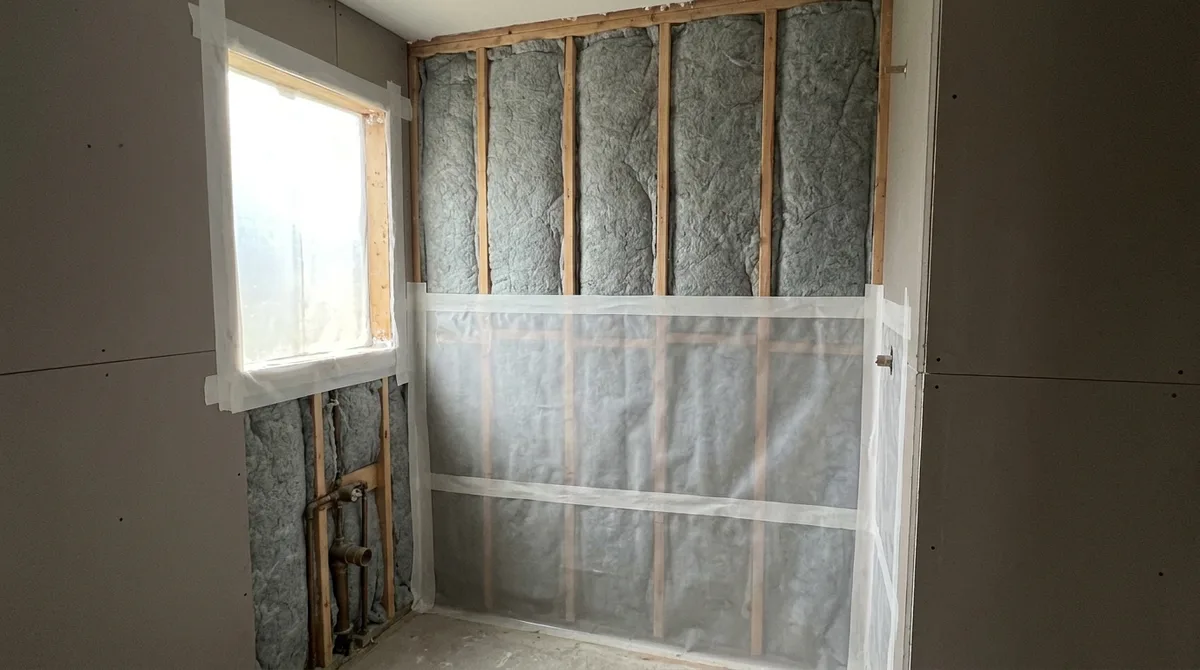
An open bathroom stud wall with batt insulation and a taped polyethylene vapour barrier, with copper supply pipes stubbed out beside a window

What this involves

Moisture Damage Remediation

Mould or moisture damage is found when the wall is already open — demolition has started, the old finish is off, and suddenly there is discolouration on the wood behind. The room is already torn apart, and the discovery becomes a scope conversation. What is seen has to be evaluated: is this surface staining on the material, or has water damage gone into the material itself?

Surface staining is discolouration on the outside face of wood or material. It looks bad, but the material beneath is sound. Material damage is decay that has gone into the wood, softening it, and breaking down its structure. The difference is established by probing the material with a tool — a knife point or a screwdriver pushed gently into the surface. Sound material resists. Damaged material is soft, and the tool penetrates. This test is how the depth of damage is determined.

If the staining is surface only, the material can be cleaned. If the damage has gone into the material, the damaged section has to be cut out and replaced. The decision is made on what the material is and what the damage looks like. Plywood that is soft through its thickness has to come out. A stud that is sound through most of its depth but soft in one corner might be sistered with a reinforcement piece. The choice depends on load and structure.

Containment is critical. Mould spores are in the air. Once the wall is opened, spores spread throughout the house if containment is not in place. The bathroom is sealed with plastic sheeting, negative pressure is created with a fan vented outside, and any material that is removed is sealed in bags and disposed of. The rest of the house is protected from spore exposure. This containment work is done before any removal happens.

After removal, the area is dried. If the material is wet, drying can take days or weeks depending on the humidity and air circulation. A portable dehumidifier runs continuously. Air movement is maintained. The moisture content is monitored. The surface has to be visually dry, and the moisture reading in the material has to be low — typically below 16 percent for wood. Only when the area is verified dry does the next phase start.

Verification is a separate step. After drying, the area is inspected again and tested. There should be no active moisture. The wood should be hard when probed. The air should smell clean. If these conditions are met, the damaged area is gone and the wall can be rebuilt. If moisture persists or new discolouration appears, drying continues. This stage cannot be skipped.

Once the area is verified dry, rebuilding starts. New material is installed — new studs, new blocking, new plywood. The vapour barrier and insulation are installed correctly so this does not happen again. The waterproofing or moisture protection is reinstated. The finish goes on. The final result is a wall that is sound, dry, and protected against future moisture problems.

  • Licensed & insured
  • WorkSafeBC coverage
  • Written quotes & contracts
  • Built to BC Building Code

Why it matters

What you get

The difference between surface staining and real damage is established by probing the material

Surface staining is discolouration on the outside of the material. Real damage is decay that has softened the material. A knife point or screwdriver pushed gently into the surface tells the story. Sound material resists the tool. Damaged material is soft and the tool penetrates. This test is done on every discoloured area so the true extent of damage is known. Some discolouration is just staining; some is serious.

Containment protects the rest of the house from mould spores during removal

Opening a wall that contains mould releases spores into the air. Without containment, those spores spread throughout the house. Containment means sealing the bathroom with plastic sheeting, creating negative pressure with a fan vented outside, and putting removed material directly into sealed bags. The spores stay in the bathroom, not throughout the house. The occupants of the house are protected from exposure.

Drying and verification dry is a stage with its own time and monitoring

After damaged material is removed, the area has to dry. Wet wood dries slowly, and rushing past this stage means failure. A dehumidifier runs, air movement is maintained, and moisture content is monitored. The material has to be visually dry and the moisture reading has to be low — below 16 percent for wood. Verifying dry is a separate step. This cannot be skipped. Rebuilding before the area is truly dry just recreates the problem.

The decision to clean or replace material is made on what the material is and the extent of damage

Surface staining on plywood might be cleaned. A stud that is mostly sound but soft in one corner might be reinforced. A joist that is soft through its thickness has to be replaced. The decision depends on the material's role in the structure and the damage extent. A damaged load-bearing member is replaced. A damaged nailer might be cleaned or reinforced. These decisions are made by understanding what each piece does.

How it runs

The process

  1. 01

    Evaluate the found damage by probing to determine if it is surface staining or structural decay

    A knife point or screwdriver pushed gently into the discoloured material tells whether it is surface staining or real damage. Sound material resists the tool. Damaged material is soft. This evaluation is done on every discoloured area. The extent of damage is determined. The scope of work — what comes out and what can stay — is established.

  2. 02

    Establish containment before any removal: seal the room and create negative pressure

    The bathroom is sealed with plastic sheeting to the door frame. A fan is installed to run outside, creating negative air pressure in the bathroom. Any material that is removed goes directly into sealed bags for disposal. The containment keeps spores from spreading throughout the house. The rest of the house is protected from exposure.

  3. 03

    Remove damaged material and dry the area completely before rebuilding

    Damaged material is cut out and removed. The area is left exposed and allowed to dry. A dehumidifier runs continuously. Air movement is maintained. The moisture content is monitored with a meter. The area has to be visually dry and the moisture reading has to be low — typically below 16 percent for wood. This stage takes as long as it takes. There is no shortcut.

  4. 04

    Verify dry before rebuilding: inspect the area and confirm there is no active moisture or new staining

    After drying, the area is inspected again. There should be no active moisture, no new discolouration, and the wood should be hard when probed. If these conditions are met, the area is rebuilt. If moisture persists or new staining appears, drying continues. This verification step is separate from drying and cannot be skipped.

Questions

Frequently asked

The finding becomes a scope conversation. The extent of damage is determined by probing the material. Surface staining might be cleaned; structural decay has to be cut out and replaced. The area is contained so spores do not spread through the house. Damaged material is removed. The area is dried completely before rebuilding. The scope and cost are determined before work continues.

Push a knife point or screwdriver gently into the discoloured area. Sound material resists the tool. Damaged material is soft, and the tool penetrates easily. This test is done on every discoloured area so the true extent is known. Some discolouration is just staining. Some is serious structural damage. The test tells the difference.

Surface staining can be cleaned. The material is sound, and cleaning removes the discolouration. Structural damage — wood that is soft, that is losing its integrity — has to be removed and replaced. The decision is made based on what the damage looks like when probed and what structural role that piece plays. A damaged load-bearing member comes out. A damaged nailer might be reinforced.

The extent of damage is determined by thorough inspection and probing. The scope of removal, drying, and replacement is estimated based on what is found. A written change order is prepared that outlines the additional scope and cost before the work continues. The change order is signed before the remediation work starts. This protects everyone from surprise costs and surprises about how much work is involved.

Related

More in bathroom insulation & moisture protection

Found something behind the wall?

It becomes a scope conversation before it becomes more work.