 Nanaimo Custom Bathrooms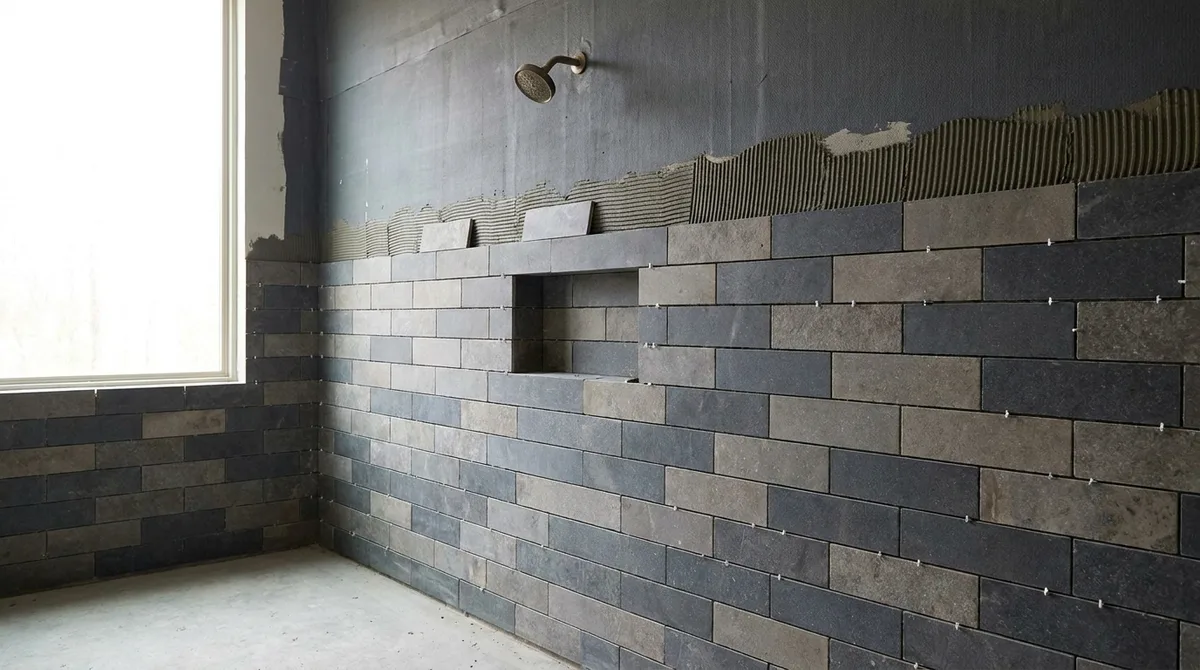
An exact match to existing tile is rarely still available. The tile may be discontinued. A new production run of the same product number is not the same; batch, firing, glaze lot, and age all differ. The tile you order is new; the tile on your wall has been there for years. They look identical until they are next to each other, and then the difference in age, weathering, and glaze surface becomes obvious. Grout colour also differs—new grout is brighter than grout that has aged in the room. Replacing one or two tiles leaves a patch that reads as a patch.
Removing individual tiles without damaging what they are fixed to is a craft in itself. Tiles are bonded to substrate with adhesive that hardens. Removing a tile means breaking that bond without taking the substrate with it—plasterboard that tears, stone that chips, cement board that cracks. The approach depends on what is underneath: a backer board can take damage that plasterboard cannot. A single tile can sometimes be removed cleanly; a larger area of tiles is often more efficient to remove as a field and start fresh.
A deliberate non-match becomes honest. Replacing a whole plane of tile with a colour or pattern that is visibly different from what was there is a design choice. A coordinating band of new tile, a deliberately contrasting field, a different material—these read as intentional renovation, not an attempted patch that failed. An owner can choose to replace one or two tiles into an otherwise intact field and accept that the patch will show, or choose to replace a whole plane and treat the difference as a design update.
What is found behind removed tile is scope description only. Substrate condition, old adhesive, evidence of previous water damage or repair—these are findings described as scope, not as a reason to choose one contractor over another or as a differentiator. The scope is what it is. If substrate is compromised, it has to be addressed. If previous damage is found, that is information that informs the approach to the new installation.