Skip to content
Nanaimo Custom Bathrooms

Bathroom Tiling & Waterproofing

Waterproofing

Parts of a bathroom beyond the shower get wet. The visible finish is not the waterproof barrier; the assembly underneath is.

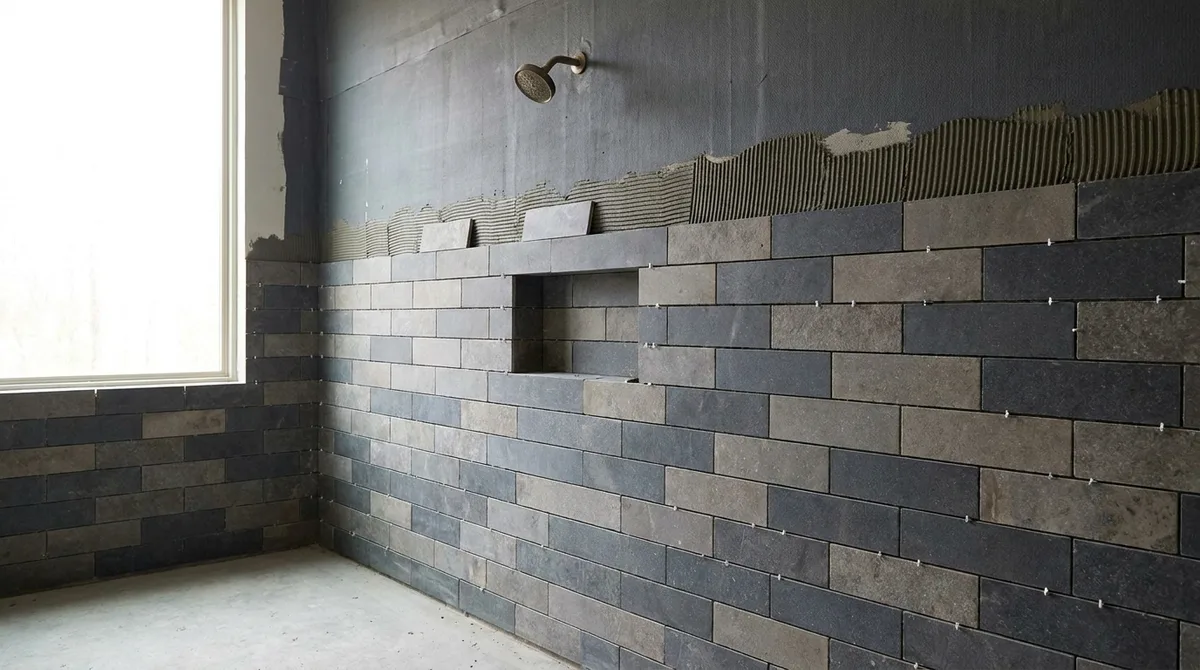
Large format wall tile being set over a waterproofed shower wall with a framed niche

What this involves

Waterproofing

Parts of a bathroom beyond the shower enclosure get wet. The floor perimeter where water splashes out from the tub or shower. The wall behind a pedestal basin where spray from hand-washing runs. The area around the toilet base. These spaces see water without anyone calling them wet areas. They are, though—they receive moisture, splash, and spray regularly enough that bare substrate will absorb water and fail. A waterproof assembly is not a product applied to a finished surface; it is a layer built into the wall or floor structure, under the visible finish.

Splash and vapour are two different loads. Splash is direct water impact—a specific area that gets spray or splash regularly. Vapour is the ambient moisture in the air after a shower, humidity that condenses on cold surfaces and can soak into permeable materials over time. A waterproof assembly under the entire floor addresses splashing at the perimeter. A moisture barrier in the wall assembly—behind plasterboard, under insulation—addresses vapour load. They are different problems requiring different solutions.

A waterproof assembly is continuous and layered. It sits under the finished material. The finished finish—paint, tile, plaster—is not waterproof. It sheds some water for a time, but water eventually finds its way through and past it. The assembly underneath catches that water and directs it back out or lets it dry. A painted wall with no moisture protection underneath will absorb water through the paint and into the plasterboard. Plasterboard saturated with moisture fails. The assembly is what prevents that failure.

The visible finish is never the thing keeping water out. Paint is not waterproof. Tile and grout shed water but are not waterproof. Plaster is not waterproof. They are weather skins, buying time while the assembly underneath does the actual work. If a waterproof assembly is not built in, and water gets behind the visible finish, it has nowhere to go but into the structure. Understanding this distinction is the foundation for lasting waterproofing.

  • Licensed & insured
  • WorkSafeBC coverage
  • Written quotes & contracts
  • Built to BC Building Code

Why it matters

What you get

Waterproof assembly under floors and walls

Protects substrate from splash and spray.

Vapour protection in wall assembly

Addresses ambient moisture and condensation.

Layered approach lets finished surfaces shed water

While assembly handles penetration.

Assembly under visible finish

Means water does not cause structural failure.

How it runs

The process

  1. 01

    Waterproof assembly built into floors and walls

    Before finishes are applied.

  2. 02

    Splash-prone areas protected from perimeter

  3. 03

    Walls with vapour load get moisture barrier

    In the assembly.

Questions

Frequently asked

The floor perimeter where water splashes out during bathing. The wall behind a basin from hand-washing spray. The area around the toilet base from splashing. The inside of an exterior wall where vapour condenses. These all need protection.

Splash is direct water impact from use—spray or splashing at a specific location. Vapour is ambient moisture in the air that condenses on cold surfaces. Splash protection addresses specific areas; vapour protection addresses the whole assembly.

No. These materials shed water for a time but are not waterproof. Water eventually finds its way through grout joints, paint edges, and panel seams. The assembly underneath is what actually waterproofs; the finish is weather skin only.

Because it requires layering—membrane, adhesive, or sealant working together with the substrate and finished surfaces. One product alone does not waterproof; the assembly does. Different parts of the room need different layers.

Building a wet area?

Waterproof assembly under finished surfaces is what actually prevents water damage.