Skip to content
Nanaimo Custom Bathrooms

Accessible & Aging-in-Place Bathrooms

Easy-Access Bathroom Conversions

Ranked by what they actually change day to day, the useful jobs are rarely the big ones.

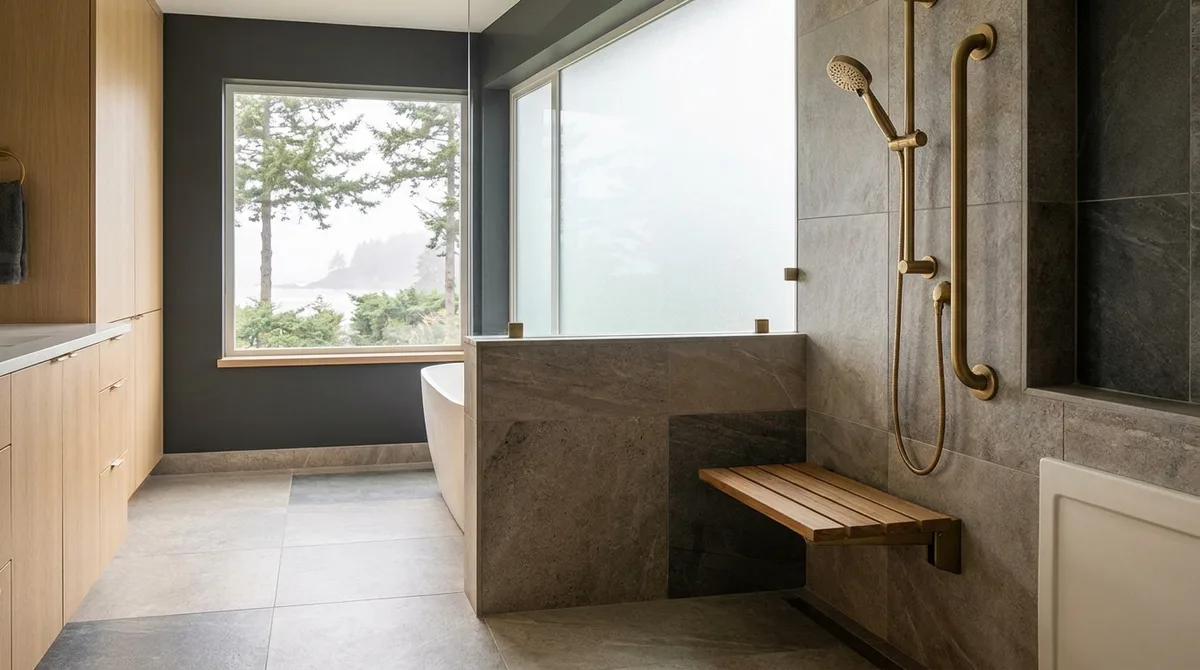
A curbless tiled shower with a folding teak seat, handheld shower on a rail and a horizontal grab rail

What this involves

Easy-Access Conversions

Small changes ranked by what they actually change for the person using the room, not by how big a job they are. This is the insight that separates useful work from busy work. Moving a mirror down changes daily life immediately. Retiling the floor might take weeks but changes nothing about daily function.

The ranking by effect rather than by scale applies to accessible bathroom conversions done incrementally. Which change is worth doing first? Usually not the biggest one. Usually one of the smallest ones — the change that makes the biggest difference to how the room actually works.

The boundary between what can be done without opening a wall and what cannot is the real dividing line. Changing a fixture requires opening walls. Changing hardware does not. Moving a mirror requires opening walls to relocate blocking. Lowering an existing mirror does not. This dividing line determines whether a change is a weekend retrofit or a weeks-long project.

When changes happen one at a time over months or years, the order matters more than it does when they all happen at once. Doing the most impactful change first changes how the room functions immediately. Doing the easy changes first makes quick progress but leaves the person in a partially adapted space for too long. The order is a genuine decision.

What usually gets done first and what people wish they had done first are often different. Grab bars are usually first because they seem important. But lowering the mirror is what actually changes the morning routine. The thermostat location is rarely considered but affects daily comfort. The ranking by actual effect is worth thinking through.

  • Licensed & insured
  • WorkSafeBC coverage
  • Written quotes & contracts
  • Built to BC Building Code

Why it matters

What you get

Ranking changes by the difference they make reveals what is actually important

A big renovation might change nothing about daily function. A small change might revolutionize it. Rank by effect, not by scale. Moving a mirror down, repositioning a toilet, changing a grab bar position — small jobs that change daily experience — are often more important than large ones.

The dividing line between opening a wall and not determines project scope

If a change requires opening a wall, it is a project. If it does not, it is a retrofit. Knowing which side a change lands on determines whether it is a weekend job or a weeks-long one. Some of the most impactful changes — repositioning a grab bar, lowering a mirror — might not require opening a wall.

When changes happen incrementally, the order determines how long the room is partially adapted

If small impactful changes are done first, the room becomes more functional immediately. If easy changes are done first just to show progress, the person waits longer for the changes that actually matter. The order determines the experience of living through the conversion.

What is most effective to change first rarely matches what is done first

Grab bars are often installed first because they seem important. But a repositioned toilet or a lowered mirror might change daily function more. The most impactful change often involves opening a wall — which is why it is put off. Doing it first or early determines how much the bathroom improves.

How it runs

The process

  1. 01

    Rank changes by the actual effect they have on daily function

    Ask: which change makes the biggest difference to how I use the room? Not which change is biggest or easiest, but which changes daily experience most. Rank the list by that.

  2. 02

    Determine which changes need a wall opened and which do not

    Some changes — repositioning fixtures, relocating blocking — require walls to be opened. Others — new hardware, adjusted mirror — do not. Knowing the dividing line helps plan which can be done quickly.

  3. 03

    Sequence the work so high-impact changes happen early and the person sees progress

    Do the most impactful change first if possible, or early in the sequence. If that requires opening a wall, consider doing it first so the person benefits from it immediately. If it does not, do it as a quick retrofit.

  4. 04

    Re-examine priorities from the perspective of living in the space while it changes

    Changes that are possible in a weekend matter more than changes that take weeks. What can be done quickly and make a difference is worth prioritizing. What takes weeks is worth doing when it is genuinely impactful.

Questions

Frequently asked

The change that makes the biggest difference to daily function, not the biggest job. Lowering a mirror, repositioning a grab bar, adjusting a toilet height — small changes that change daily use. Do the most impactful change first if possible, not the easiest.

Repositioning mirrors, adding or relocating hardware, changing fixtures that are surface-mounted. Adjusting toilet height if the fixture can move. Anything that does not require accessing framing or relocating blocking can be done without opening walls.

By impact and urgency. If a change makes daily life immediately better, do it first. If it requires opening a wall, do it early so the benefit lasts through the rest of the project. If it is quick, consider doing it as quick wins between bigger work.

Changing one thing at a time?

The order matters more than the list does.