Skip to content
Nanaimo Custom Bathrooms

Accessible & Aging-in-Place Bathrooms

Low-Threshold Showers

The honest trade-off is small: an upstand you might catch, against water that leaves the shower. Neither answer is automatic.

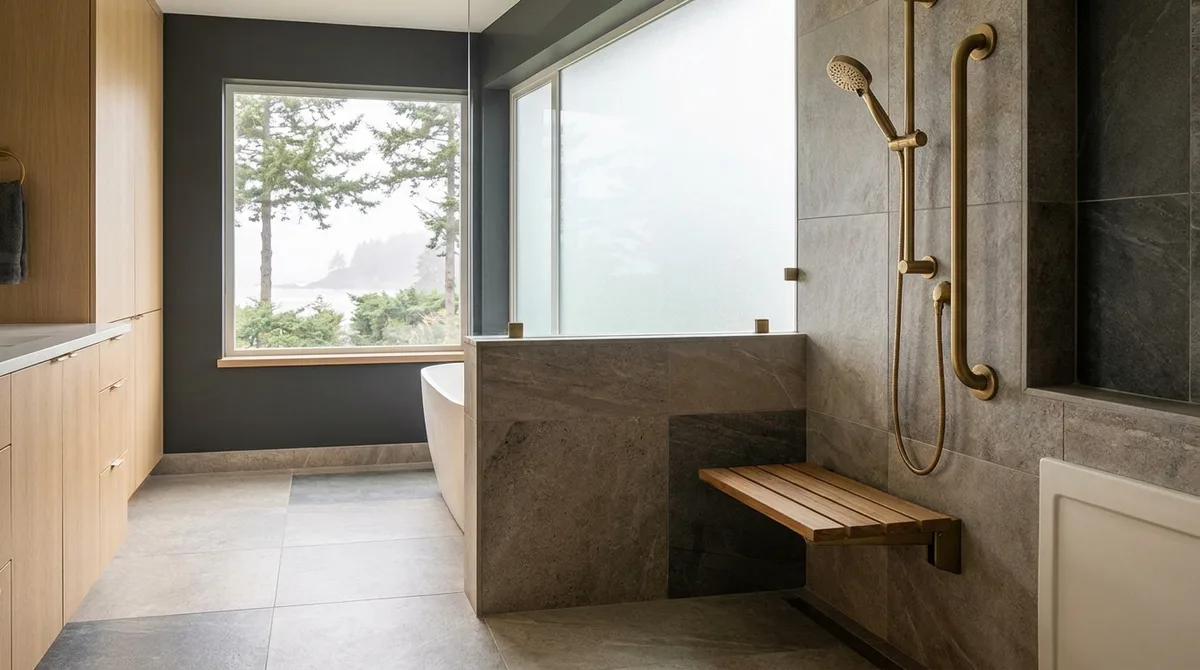
A curbless tiled shower with a folding teak seat, handheld shower on a rail and a horizontal grab rail

What this involves

Low-Threshold Showers

A threshold is the edge between the shower floor and the bathroom floor. An unsteady foot catches on it. Water escapes past the bottom if there is no lip. The honest trade-off is between a small upstand that a foot might catch, and water that leaves the shower floor and runs onto the bathroom floor. Neither choice is automatic.

A threshold height of zero — a completely level floor from bathroom to shower — seems like the obvious choice. No trip risk, the argument goes. But a level floor with no lip lets water run out onto the bathroom floor. The water collects at the perimeter, at the base of the toilet, at the junction with the rest of the room. Containment fails.

A small upstand — a 3/8-inch lip, a half-inch rise — catches the foot of someone who is not looking down or who has reduced mobility. The foot catches and they stumble. But the upstand contains water. The water that would otherwise escape is held on the shower floor or in the tray. This is the honest trade-off.

The choice is between trip risk and water control. A person with unsteady balance who is watching where they step can manage a small upstand. A person who cannot watch the floor cannot. A person who uses mobility aids that are sensitive to any floor change cannot tolerate a lip. The threshold height decision depends on the person using the room and how their balance and awareness actually work.

What people do not always consider is that the right answer changes over time. A threshold height that works when balance is good might not work when balance changes. Choosing a height that still suits in several years means choosing based on what the future might look like, not only on what works today.

The floor on either side of the threshold is also a detail. The shower floor is almost always sloped to drain. The bathroom floor outside the shower should not slope toward the threshold — it should slope away or be level, so water does not collect. The transition between the two slopes and the level of the threshold has to be coordinated.

  • Licensed & insured
  • WorkSafeBC coverage
  • Written quotes & contracts
  • Built to BC Building Code

Why it matters

What you get

A threshold is the thing an unsteady foot actually catches, described as everyday experience

A person stepping from the bathroom into the shower is watching the water, the walls, the fixtures. They are not always watching the floor. An unsteady foot catches on a lip. A person with reduced sensation in their feet might not feel the lip and could trip. This is not a theoretical risk. It is an everyday reality of using the shower.

A small upstand sometimes beats no threshold: containment against trip risk is an honest trade-off

A level floor lets water escape. A person who loses balance briefly or whose foot catches can recover on a small upstand. A person with good balance can manage it without thinking. The choice is not whether to have a threshold — it is whether the risk of trip is worth the benefit of water containment. Sometimes it is. Sometimes it is not.

The floor on either side is more than a detail — it is how the threshold reads and how water behaves

The shower floor slopes to drain. The bathroom floor outside should slope away from the threshold so water does not collect. The height of the threshold is only one part of the water-control picture. The slope of the surrounding floor is equally important. Together they decide whether water is contained or escapes.

Choosing for today but true in years — threshold height changes as mobility changes

A threshold height that works when balance is perfect might not work when balance changes. Choosing a height that will still suit in several years means anticipating change. A slightly higher upstand might be better tolerated in the future than a level floor that lets water escape. The choice is made with the future in mind, not only with today.

How it runs

The process

  1. 01

    Establish the actual need: is trip risk or water containment the priority?

    Ask directly: which is the real problem? Is the concern that water escapes, or that the person might trip? Different people answer differently. The answer drives the threshold specification.

  2. 02

    Specify the threshold height based on the actual need, the person's movement, and the future

    A threshold of zero is level but lets water escape. A 3/8-inch upstand catches the foot but contains water. The choice is based on the person's balance, their awareness of floor surfaces, their use of mobility aids, and what their mobility might be in several years.

  3. 03

    Coordinate the floor on either side so water and feet work together

    The shower floor slopes inward to the drain. The bathroom floor slopes away from the threshold or stays level. The threshold height is set knowing how water and floor slopes will interact. The result is that water is contained and the floor surface transition is as smooth as possible.

Questions

Frequently asked

Not necessarily. A level floor avoids trip risk but lets water escape onto the bathroom floor. A small upstand contains water but a foot can catch on it. Neither answer is automatic. The choice depends on whether water containment or trip risk is the priority, and on how the person using the room actually moves.

It contains water that would otherwise escape onto the bathroom floor. A threshold as small as 3/8 inch is enough to hold back water and keep it on the shower floor. An unsteady foot can catch on this height, which is the trade-off for water containment.

The shower floor slopes toward the drain. The bathroom floor outside should slope away from the threshold so water does not collect there. The two slopes should meet at the threshold, creating a smooth transition. This coordinate ensures water behavior is controlled.

For later. Mobility changes over time, and the right threshold height today might not work in several years. Choosing a height that will still suit when balance or mobility changes is the practical approach. A slightly higher threshold might be better tolerated in the future.

Weighing up a shower threshold?

The honest trade-off here is smaller than it sounds — and worth talking through.