Skip to content
Nanaimo Custom Bathrooms

Accessible & Aging-in-Place Bathrooms

Handheld Showerheads

Once it is the main way someone washes rather than a convenience, almost every part of the choice changes.

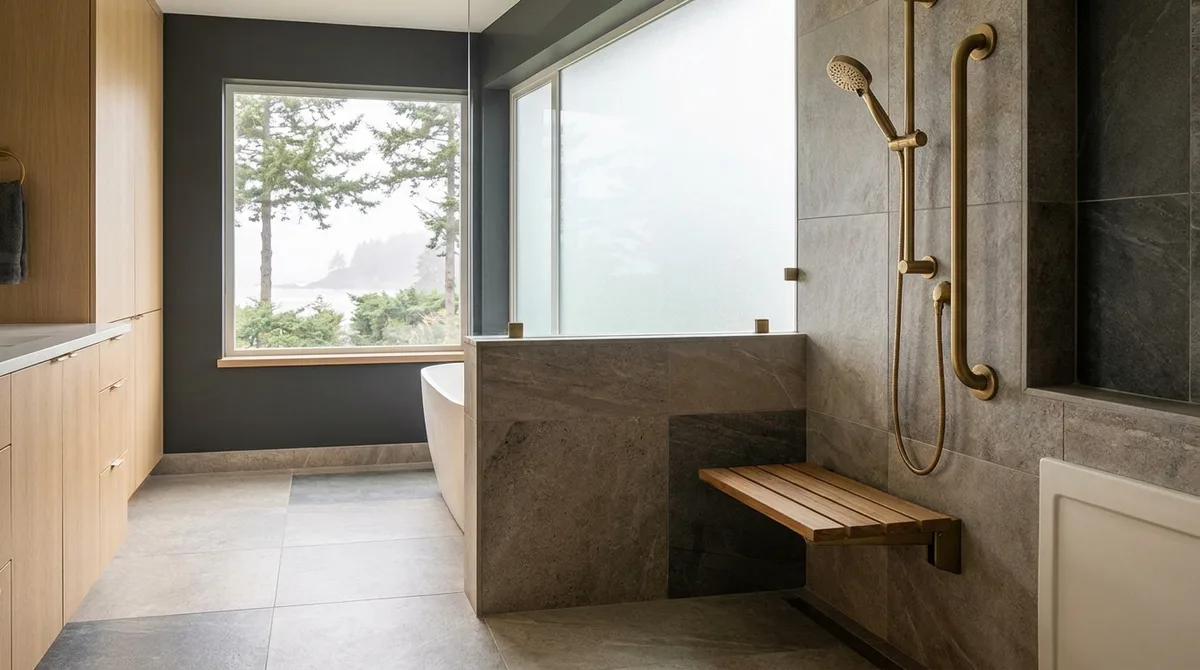
A curbless tiled shower with a folding teak seat, handheld shower on a rail and a horizontal grab rail

What this involves

Handheld Showerheads

A handheld shower fixture shifts from convenience to necessity when it becomes the primary way someone washes. A convenience handheld is something you use sometimes, when you want it. A primary handheld is how you wash every day. The shift changes what the handheld has to be.

A convenience handheld is often a secondary fixture attached to the fixed showerhead. It is used standing up, taken down for a moment, then returned. The primary handheld is the main fixture. It is used seated or standing, held constantly, operated one-handed while the other hand steadies or grips. The demands are entirely different.

Operating it seated means the user is lower and the bracket placement changes. A bracket at typical standing height is too high when sitting. The user has to reach up to reach the water. The bracket height has to be determined by the seated position, not the standing one.

Handle form, weight and control shape are critical for a primary handheld. A heavy head with a thin handle exhausts the hand quickly. A weaker grip needs a thicker handle and a lighter head. The control mechanism has to work with one hand — pulling a trigger, turning a wheel, both actions the same hand must manage while holding the head steady.

One-handed operation is the real test. A handheld that requires two hands to control is not usable as a primary method. The person has to hold the head with one hand, possibly steady with the other. The water flow control has to work with the same hand holding the head. This is the design constraint. This ensures quality outcomes. This ensures quality outcomes.

  • Licensed & insured
  • WorkSafeBC coverage
  • Written quotes & contracts
  • Built to BC Building Code

Why it matters

What you get

The shift from convenience to primary method changes nearly every specification

A convenience handheld can be heavy and require two hands. A primary handheld has to be light and work one-handed. A convenience fixture is secondary. A primary fixture is the only way someone washes. The entire equipment choice is different.

Seated use changes bracket height and what the fixture has to reach

A fixture at standing height puts the water too high when sitting. The bracket has to be lower. The reach from a seated position to the fixture is also different. Water coverage has to extend from the seated position, not from standing height.

Handle form, weight and control for weak grip is a complete specification

A light head, a thick handle for grip, and simple control that works with one hand are not optional details. They are the core specification for a primary handheld used by someone with reduced grip strength or mobility.

One-handed operation is not a nice-to-have — it is mandatory for a primary fixture

If the fixture requires two hands to control, it is not usable as a primary wash method. One-handed operation — holding the head and operating the control with the same hand — is the standard the fixture has to meet.

How it runs

The process

  1. 01

    Recognize the shift from convenience handheld to primary fixture

    Is the handheld a secondary feature, used sometimes? Or is it the primary way the person washes? The answer determines what the fixture has to be.

  2. 02

    If primary, specify for seated use and determine bracket height from the seated position

    The bracket height is determined by the seated position, not standing. The water coverage is planned from sitting, not standing. The entire fixture relationship is redesigned for seated use.

  3. 03

    Specify light weight, thick handle and simple one-handed control

    The weight has to be manageable held one-handed constantly. The handle has to be graspable by a weaker hand. The flow control has to operate with the same hand holding the head.

  4. 04

    Test the one-handed operation before specifying — it has to work as a complete system

    A handheld that needs two hands to control is not usable. The test is simple: can one hand hold the head steady and control the flow? If not, the fixture is not suitable as a primary method.

Questions

Frequently asked

Everything. Weight, handle, control mechanism, bracket height all change. A convenience handheld can be heavy and require two hands. A primary handheld has to be light and work one-handed. The entire specification is different. The fixture is no longer secondary — it is the main method.

Lower than standing height. The bracket is positioned so the fixture is reachable and useful from the seated position. Water coverage and reach are planned from sitting, not standing. The height is determined by what is accessible from the seat.

Weight and handle thickness. A light head with a thick handle is easier to hold one-handed than a heavy head with a thin handle. A simpler control mechanism that works with one hand is easier than a complex one requiring two hands. Grip-ability is the primary specification.

Choosing a handheld?

Try it one-handed and sitting down — that is the real test.