 Nanaimo Custom Bathrooms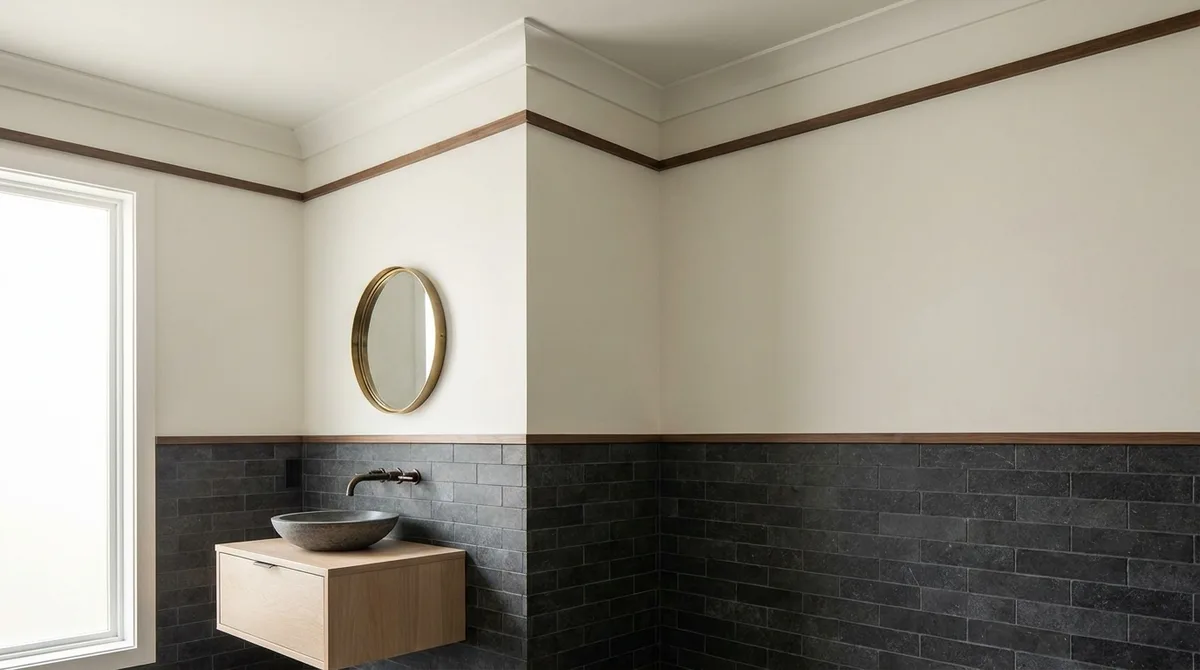
The choice in a bathroom is not the colour. The choice is sheen. Flat paint — zero sheen — hides imperfections beautifully. You can see the colour, and the wall looks soft. But flat paint does not wash. Spray a flat wall with water and wipe it, and the paint can mark or lose finish. Gloss paint — maximum sheen — washes beautifully. Spray it and wipe it and it comes clean every time. But gloss shows every imperfection on the wall. Every drywall tape, every joint, every ripple in the board shows as a shadow under gloss. In between are satin and semi-gloss, and they split the difference.
A bathroom is a bright, small room, often with one or two windows and artificial light bouncing off mirrors and fixtures. Gloss throws glare off a small bright room like you would not believe. Walk past a glossy bathroom wall with light raking across it, and the surface can hurt to look at. That glare is fine on a large wall in a large space, but in a bathroom it is aggressive. Sheen level decides how much that glare is an issue.
The trade-off is real: washability against visibility of imperfection, and glare against the soft look of flat paint. Satin sits in the middle. It is washable — you can wipe a satin wall without damage. It reveals less than gloss but more than flat. It throws some glare but not aggressive glare. Satin is the choice most bathrooms land on because it compromises between all three factors.
Before any paint goes on, the substrate has to be prepared with primer. But primer is not one thing. Over new drywall, a primer-sealer pulls moisture out of the board and prepares it for paint. Over an old painted wall, primer depends on what is there. If the old paint is latex, latex primer works. If it is old oil-based or gloss, the situation changes. Oil and gloss paint are smooth and slick; new paint does not grip them without something in between. Apply latex paint over old gloss without primer, and it will peel off months later. The wrong primer start shows not immediately but weeks or months down the line.
Wall, ceiling and trim are three separate jobs, not one. The wall gets one colour and sheen. The ceiling gets a different colour — almost always flat white or near-white — because a glossy ceiling reflects light downward and creates glare overhead. Trim gets a third treatment, usually semi-gloss or gloss, because trim is handled, touched, and exposed to moisture. It has to wash and resist wear. Treating them as one job — one colour, one sheen — is a mistake that shows immediately.
Cutting in is the technique of painting the edge of one surface against another: wall against ceiling, wall against tile, wall against trim. The order matters. Paint the ceiling first, cutting in where it meets the wall. Then paint the wall, which gives you a chance to correct any ceiling paint that bled onto the wall. Paint the trim last, which again gives you a chance to correct wall paint on the trim. The lines come out clean because each step has a chance to neaten the line from the previous step.
After painting, cure time is not the same as dry time. The paint is dry to the touch in a few hours, but it does not cure fully for weeks. Cure is when the paint achieves full hardness and washability. A bathroom painted and then used heavily — showers running, high humidity — before cure is complete can have paint that is soft, marks easily, or mildews.