 Nanaimo Custom Bathrooms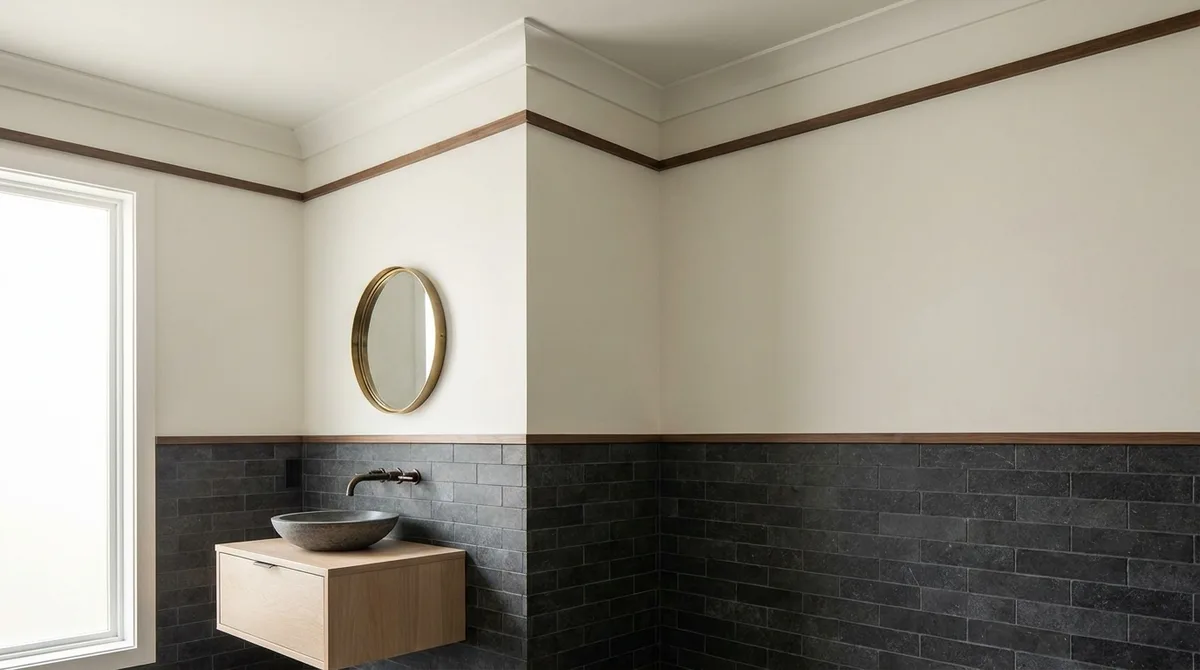
A mirror is not a decoration. It is a heavy, fixed piece of glass that has to be sized to the people who will stand at it, positioned for them to use, and fixed securely into something that was planned months earlier. The decision about size comes from the range of heights of the people using the room. The decision about position comes from where the basin is. Both decisions get made late, usually when everything else is done, and both are hard to change once the mirror is hung.
A mirror sized to the tallest person in the household will not frame the shortest person. A mirror compromised to fit everyone still ends up too high for the shortest or too low for the tallest. The right approach is to size a mirror that captures the face height range. For an adult and a child using the same sink, the mirror is typically positioned higher and wider so both can see their face. For adults of different heights, the mirror is positioned so the middle range of faces is captured, and each person stands slightly forward or slightly back depending on their height.
Height is absolute. The top of the mirror is hung at a certain height above the floor. The bottom sits lower. For an adult of typical height, the mirror top is usually 80 inches from the floor, and the mirror is 3 feet tall, so the bottom sits at 44 inches. A child looking up to see their face above the bottom edge, or looking at the bottom of the mirror — or standing on a stool — is part of using that mirror. The height decision is set for the primary users, and others work around it.
Fixing a mirror into blocking is different from fixing it into drywall with an anchor. An anchor into drywall can hold a light mirror, but a full-length or large mirror is heavy. The load needs to go into framing. The blocking is installed behind the drywall, specifically to take the mirror load, and the mirror is fastened through the drywall into that blocking. This decision is made when the walls are framed, months before the mirror is chosen.
Edge treatment on a mirror — polished edges, bevelled edges, framed edges — is not just appearance. An unprotected edge on a mirror is sharp and collects moisture. Water works into the edge, behind the reflective backing, and the backing deteriorates. A polished edge is smooth but still vulnerable. A bevelled edge adds visual interest and hides moisture better. A framed mirror has edges protected by the frame. Edge protection, chosen with moisture in mind, extends the mirror's life.
Mirror backing can deteriorate. The reflective coating on the back of a mirror is a thin layer of silver or aluminium. If water gets behind the mirror — because condensation is heavy, or sealing is poor, or the edge is unprotected — the backing deteriorates. Spots appear on the reflective surface. The mirror becomes cloudy. Once this starts, it spreads. Protecting the edges, sealing the edges, and keeping the backing dry is how a mirror stays reflective.
Position relative to the basin is important. A mirror directly above the basin is obvious. But the mirror is also fixed, and the height is set. If the basin is positioned wrongly, or later moved, the mirror height can feel wrong. The detail that ties them together — basin height, mirror position, height of the person — is worth getting right at the planning stage.