 Nanaimo Custom Bathrooms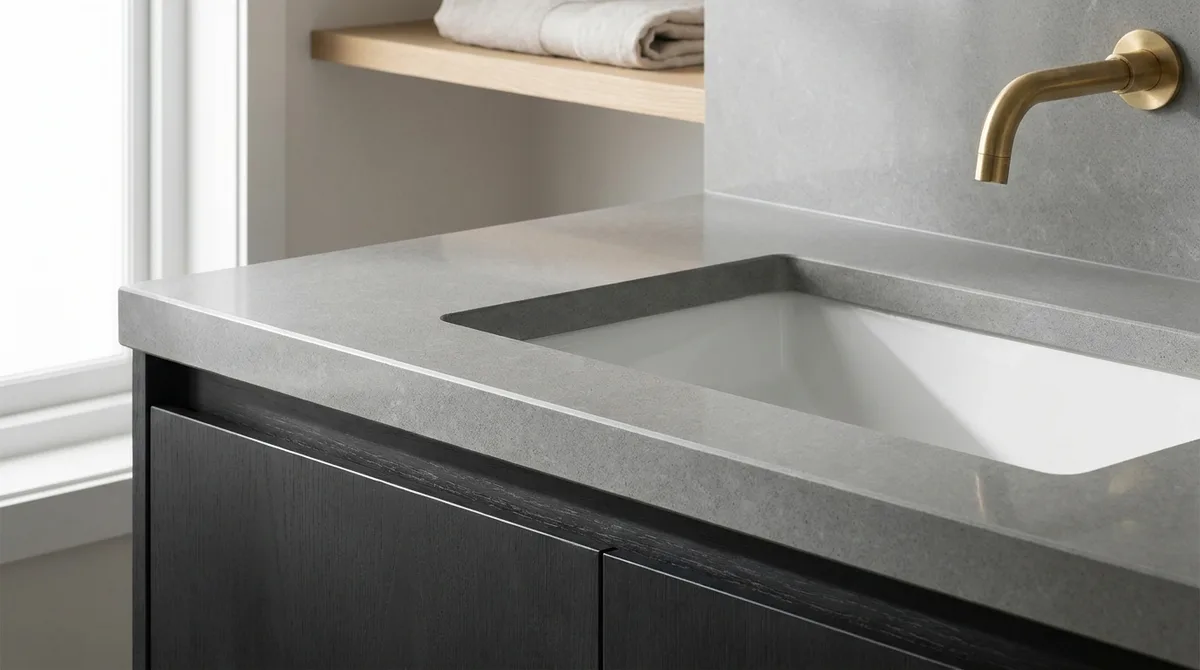
A basin is a plumbed fitting. Whether it is undermounted, set on top, or integrated into the countertop material, the bowl itself arrives as a separate component that has to be fitted with a tap and waste system before it goes into its final position. The three elements—bowl, waste outlet, and tap—have to line up precisely. The waste outlet on the bowl must align with the trap position already fixed in the wall or floor. The tap has to reach over the basin and land at the right height. The seal between bowl and surface is a serviceable joint, not a permanent bond, so it can be addressed later if needed without destroying the basin.
A basin is mounted in different ways depending on its type and the surface it sits in, but the plumbing—the connection to supply and waste—is independent of the mount. Supply lines bring hot and cold water to the tap. A waste line carries dirty water away. The tap and waste assembly is fitted to the bowl before the bowl goes anywhere, while access is unlimited and mistakes can be corrected without damage. Only after that assembly is complete does the basin go into its mount.
When replacing a basin into an existing countertop cut-out, the old opening dictates what will fit. A cut-out sized for an undermounted bowl cannot accept a top-mounted vessel. A two-tap spacing built for a wide bowl will leave single-tap fixtures looking wrong. The new basin has to be chosen to fit the opening that exists, or the countertop has to be reworked to accommodate a different basin. This is the kind of constraint that only matters once you are looking at what is actually there.