 Nanaimo Custom Bathrooms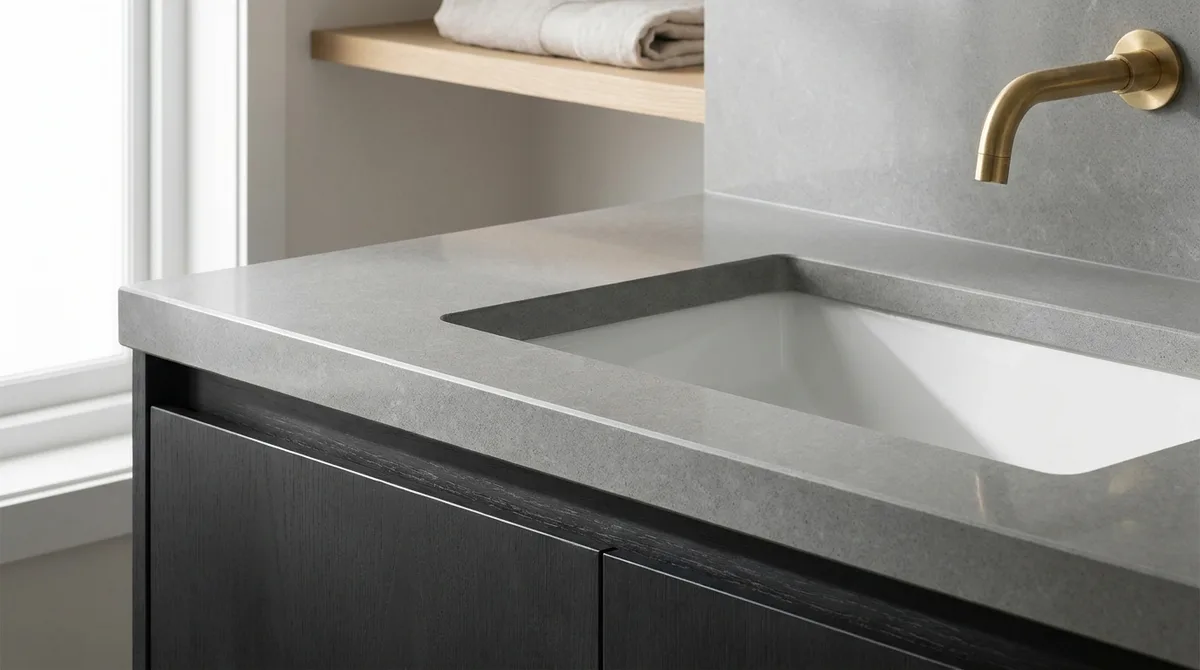
A vessel sink is a bowl that sits on top of the countertop, not in it. The basin is an object—something you look at—and every dimension follows from its height. The drop from spout to water is longer than it would be for an undermounted or drop-in basin, because the basin rim is already high above the surface. A faucet chosen for a standard 30-centimetre drop to water is too short for a vessel; the water spills beside the bowl, not into it. A tall vessel faucet is necessary, or a wall-mounted spout positioned higher on the wall behind the basin.
The vessel changes the visual weight of the vanity. The bowl sits proud of the surface; it is a sculptural element in the bathroom. Design becomes about pairing basin and faucet so the proportions work—a shallow wide bowl needs a different spout reach than a deep narrow one. Splash is different in each. A shallow bowl and a direct downspout splash easily; a deep bowl contains the water longer. This is not about function; it is about everyday experience—how water behaves in the basin you chose and whether you are happy with it.
The seal where the vessel sits on the surface is different from an undermount or drop-in. The bowl is not integrated; it is sitting on the surface. A gasket or sealant is applied around the base, and that seal is the only thing keeping water from running behind the bowl and into the structure underneath. The seal is serviceable—it can be removed and replaced—but it has to be maintained. If it fails, water runs under the bowl and can damage what is beneath.
A vessel opens design possibilities that other basin types do not. The basin is part of the visual design; its material, colour, and shape are intentional choices. The countertop surface around it is visible and part of the design composition. The height creates a non-standard working height at the basin. Not everyone is comfortable at that height; it depends on your proportions and what feels natural when leaning over to wash your hands or face.