 Nanaimo Custom Bathrooms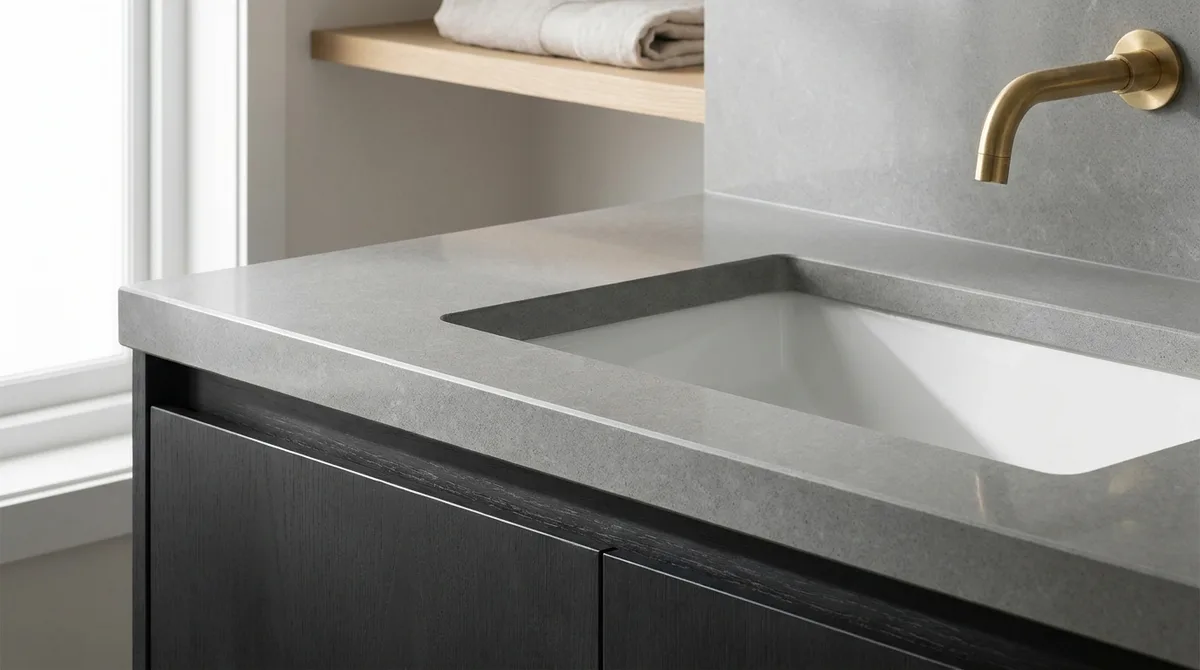
Granite is a crystalline igneous rock—hard, dense, and built from mineral flecks that create a granular surface pattern. It reads differently from marble or slate at close range. The grain is not a dramatic vein running through the stone; it is the random scatter of feldspar, quartz, and mica throughout the whole depth of the material. The variety in granite is in the overall colour tone—blacks and greys, reds and oranges, whites and creams—with fleck and shimmer throughout, not in dramatic lineation. At arm's length, a slab reads as a solid colour. Close up, it is texture and depth.
Finish choices change how that texture and colour read. A polished surface brings out depth and sheen, enhancing colour but showing every fingerprint. A honed finish is matte, revealing the stone itself without gloss, and fingerprints are less visible. A leathered finish is textured, catching light in different ways across the surface, hiding marks even better than honed but less dramatic than polished. The same slab in three finishes reads three different ways—not a difference in quality, but a difference in how light plays across the surface and what you see when you look at it.
Granite is hard—harder than most dropped objects it will encounter. Its density means a thin mitred edge is more robust than it would be in marble or engineered stone. A cut corner in granite stays sharp. The crystalline structure means it can be honed and polished without concern about revealing vulnerability the way you might with a softer, veined stone. It is a material that shows use and time differently than marble; there is no etching or patina in the way marble builds character. Granite just gets older, and its character is in its hardness.