 Nanaimo Custom Bathrooms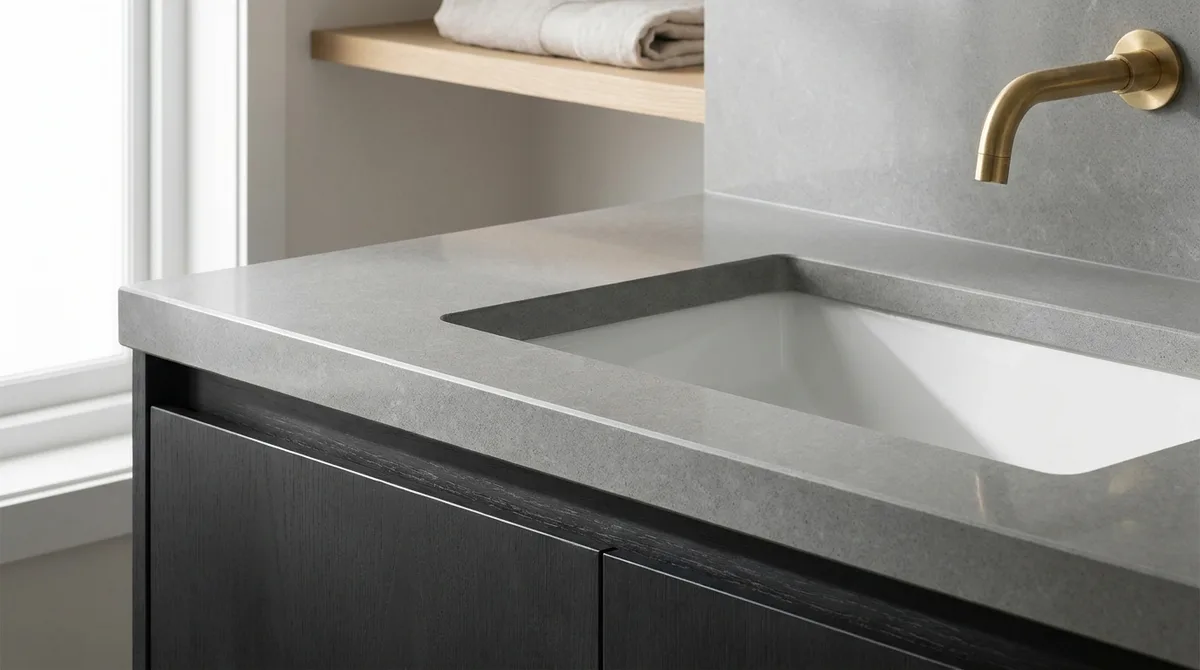
Natural stone countertops are not chosen from a catalogue. You do not order a stone by name or colour code; you go and stand in front of a slab that will become your countertop. A sample chip represents the colour family and surface character, but a chip is a splinter. The slab is a slab—sometimes three metres long, sometimes one metre by two, every piece unique. The vein runs a particular way on this slab. The colour reads a particular way in the light of the showroom and will read a different way in your bathroom under different light at different times of day.
Once you have chosen a slab, it is reserved. Your name goes with that piece. It will not become someone else's countertop. The slab is then laid out—the fabricator decides where to cut and position your countertop on that piece so the best area lands where it will be visible. A vein that breaks across the middle of your run might be positioned to run down the backsplash instead, or the cut might be angled so the vein lands at the edge where it frames the basin. This decision is made by someone who understands stone and vision at the same time.
Porous stone—granite, slate, marble, limestone—is sealed. Sealing is not a one-time treatment applied before installation. It is an ongoing practice. A seal keeps water and oils from soaking into the stone. How often sealing happens depends on the stone type, how much use the countertop sees, and how much absorption you are willing to accept. This is routine maintenance, the same way you maintain any porous surface that meets water and use regularly. The seal is described in general terms; product names and specific protocols are owner decisions, not fabricator selling points.