Skip to content
Nanaimo Custom Bathrooms

Bathtubs & Showers

Shower Installation

A shower is built in an order that cannot be rearranged, and the flood test is the one stage that proves the rest of it worked.

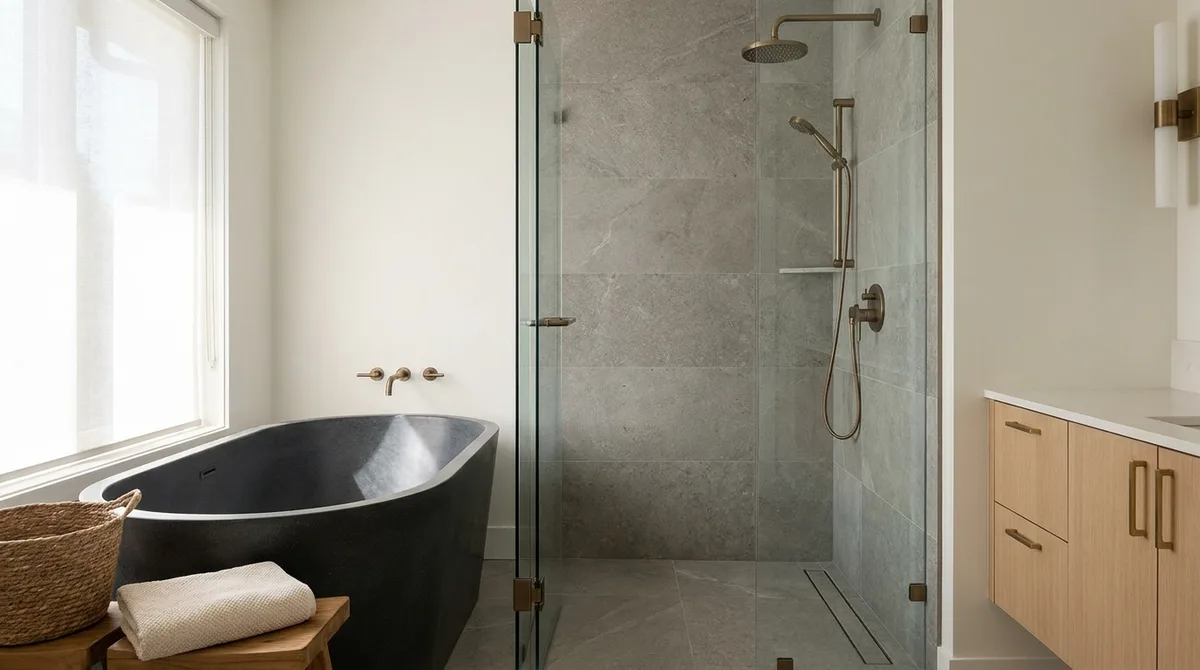
A tiled walk-in shower with a frameless glass panel, linear drain and a recessed niche

What this involves

Shower Installation

Most of what goes wrong in a shower is a sequencing failure rather than a workmanship one. The materials were usually fine. They were covered before they were ready, or a stage that would have proved the assembly got skipped because the tile was already booked. The order is not a preference — each stage depends on the one before it having cured, and none of them can be none can be reshuffled to suit a calendar.

The flood test is the checkpoint everything else rests on. Once the waterproofing is complete and cured, the drain is plugged, the floor is filled to just below the top of the curb, the water line is marked and it is left standing overnight. A drop in that line, or a damp patch appearing on the ceiling below, is a fault found while the fix costs a morning. The same fault found later costs the tile, the glass and the wall as well. It is the cheapest hour in the whole build and the one most often traded away.

Cure periods stack up behind it. Waterproofing cures before it can be tested, adhesive before grouting, grout before silicone, and silicone before the shower is run. Each is roughly a day at ordinary indoor temperature and longer in a cold, damp room — which describes most unheated bathrooms on this coast in February. Together they account for three or four days in which nothing visible happens.

Two fixed points sit outside that. Where the scope requires a permit, the plumbing rough-in is inspected before the walls close, so the waste, the vent, the valve and the blocking for glass, grab bars and a bench all have to be correct at that moment rather than adjusted afterwards. And glass is templated against finished tile and then fabricated, which puts a gap between the tiling finishing and the enclosure arriving. Both are predictable and belong in the schedule.

  • Licensed & insured
  • WorkSafeBC coverage
  • Written quotes & contracts
  • Built to BC Building Code

Why it matters

What you get

The order settled before it starts

Rough-in, blocking, waterproofing, cure, test, tile and glass are scheduled as separate stages, so nothing gets covered early because a delivery turned up.

Faults found while they are cheap

A flood test catches a failed corner or a poorly bedded drain when the repair is a morning, rather than after the tile and the enclosure are paid for.

Cure time counted as build time

The days when nothing visible happens are in the programme from the start instead of appearing as an unexplained pause somewhere in the middle.

How it runs

The process

  1. 01

    Strip out and rough in

    The old assembly comes out, waste, vent and valve are set to the new layout, and blocking for glass, bars and a bench is fixed while the studs are still open.

  2. 02

    Waterproof, cure and flood test

    The membrane is detailed at the drain, the corners and every change of plane, left to cure, then the floor is plugged, filled, marked and left overnight.

  3. 03

    Tile, grout, glaze and commission

    Tile follows a passed test, grout and silicone take their own cure, glass is templated to the finished surfaces, and the shower is run and checked.

Questions

Frequently asked

Because the membrane has not finished curing, and covering it early is how one ends up with a soft spot that tears at a corner months later. A full cure is usually about a day, longer in a cold or humid room, and the flood test then needs the assembly holding water for another day. Those two days are the reason a shower cannot be built in a week, and compressing them is not a saving — it is a repair deferred.

A membrane that looks right and a membrane that holds water are not the same thing. The faults worth catching are invisible — a pinhole at a change of plane, a corner that was not properly lapped, a drain flange that never bedded down. None show to the eye, and all show up as a stained ceiling a year or two on. Filling the floor and marking the line takes under an hour, and it is the only stage that proves the assembly rather than assuming it.

Longer than the days actually spent working in it. A shower build has active work at either end and a stretch in the middle governed by cure periods and by glass fabrication, which only begins once the tile is finished because the panels are templated to the surfaces they seal against. In a one-bathroom house that middle stretch is the part worth planning around, and it is scheduled rather than discovered halfway through.

Planning a shower build?

The sequence, the cure periods and the flood test are set out with the scope in writing before anything comes out of the wall.